Unattributed

socialmedia

Frowning Elon surrounded by news media and social media logos

Introduction: The Story So Far…

NOTE: This article was started before NPR and PBS decided that it was time to leave Twitter.

I recently emailed NPR regarding the situation with their Twitter account being labeled as “state sponsored”. In said letter, I did bother going through and summarizing all the things that the media has put up with on Twitter in just the five months since Elon Musk’s takeover of the platform. So, here is a summary:

Since the original labeling of NPR as “state sponsored”, Twitter (really Elon Musk) has relented (somewhat) and changed the label to read “Government Funded”. This label has also been applied to PBS. (The Hill: Twitter drops ‘state-affiliated’ label from NPR after backlash) During this whole kerfuffle, one of the better known NPR stations, KCRW, decided to leave Twitter as they felt the platform was no longer a trustworthy.

At the same time, Twitter also started blocking replies, likes, and retweets to posts that contain links to Substack articles (Ars Technica: The dumb reason Twitter won’t allow retweeting tweets linking to Substack). The reason for this is a perceived challenge by a new Substack feature called “Notes” that is similar to Twitter in appearance, but is tied to Substack’s subscription model (The Verge: Substack is getting tweets — err, ‘Notes’).

Meanwhile, it is being reported that Twitter is no longer restricting the reach of Chinese and Russian state sponsored media outlets (Semafore: Twitter is no longer policing Russian and Chinese state-backed media).

And, of course, there is the pettiness of removing The New York Times’s verified check-mark, after the news organization stated they would not be paying Musk’s exorbitant extortion to keep the mark.

But, while the assault on media outlets that has occurred over the past few days should be seen as quite alarming to the media at large, it isn’t even the beginning. All the way back in November, Playbill left Twitter citing an expanded tolerance of hate and misinformation (The Hollywood Reporter: Playbill Leaves Twitter, Says Platform Now Blurs “Actual News and Insidious Rhetoric”). CBS News halted Tweeting for a day because of the “uncertainty” about the platform.

And, in mid-December, Elon banned the accounts of reporters from the New York Times, Washington Post, Voice of America, CNN, Mashable, The Intercept and several freelance journalists over their reporting on his banning of the ElonJet account a few days earlier (The Verge: Elon Musk starts banning critical journalists from Twitter).

And, just a few weeks ago, Twitter permanently banned the 165-year-old Globe Gazette newspaper from Mason City, Iowa without giving any reason. The account was restored a day later, but they lost all of their 6K followers, and were never given a reason as to why they were banned in the first place (Des Moines Register: 165-year-old Iowa newspaper’s Twitter account restored. Why it was banned remains a mystery).

And, even more recently, Twitter blocked 122 accounts at the request of the Indian government. Those accounts included several journalists: Pieter Friedrich, Sandeep Singh, Kamaldeep Singh Brar, and Gagandeep Singh. (rest of world: Twitter blocked 122 accounts in India at the government’s request).

And finally, in the most hilarious turn of them all… The Musk-hired “journalists” Matt Taibbi and Barry Weiss have been either fired or shadow-banned on Twitter. (TechDirt: After Matt Taibbi Leaves Twitter, Elon Musk ‘Shadow Bans’ All Of Taibbi’s Tweets, Including The Twitter Files).


Re-Interpreting The Substack Story

While I initially interpreted the Substack story as just another of Elon’s odd little petty tantrums against a company offering a new feature to compete with Twitter, I’ve re-evaluated that perspective. The fact is, his tantrum was about more than just the Notes feature. The new offering from Substack served to directly undermine Elon’s plans for his “Twitter 2.0”.

It has been widely reported that Musk is seeking to turn Twitter into his vision of an “Everything” app. This has been something of an idea that goes back to his early days when developing what later became PayPal. And recently, he has signed an agreement with eToro to expand Twitter’s offerings in financial areas, like stock quotes, crypto market tracking, etc.

But what does this have to do with Substack? While not as apparent at first, Notes cuts deeper than it first appears. Elon wants Twitter to do everything: that includes publishing, and he has been taking steps to make this a reality.

First, sometime back, he announced that there was going to be a system for creators to get payouts. Then he expanded the size of Tweets and Videos for Twitter Blue subscribers. And, just in the last week, he announced large Tweets with a 10,000-character limit, and support for italics and underlining.

When you put all of these things together, it looks more and more like part of the system he was building was going to try to compete with Substack. And that lead him to make retaliatory moves against Substack when they added Notes: he saw that as an attempt to draw potential users of his publishing platform away.


Inflection Point

That was just an introduction to what Twitter has become where news media is concerned, since Elon Musk’s takeover. It’s a long way from the platform that was once described as the “public square” or the “town hall of the internet”. In fact, it appears that in his ideal world the journalists and reporters will turn to him to publish their work, instead of just using the platform to circulate works that are created on other (competing) platforms.

Elon’s Twitter is about controlling communication. Gaining Elon’s favor is the way to give your message a chance to be heard. And the best way to gain his favor is to (a) pay for the privilege, (b) not be critical of his statements and actions, and © make certain there isn’t someone else he favors more than you.

This is the absolute antithesis of the foundations of the free press. Elon is acting in a manner that is completely contrary to the foundation of American values. America was founded on the premise that we could have a self-governing country that wasn’t afraid of critical voices, and rejected dictatorial leadership.

Throughout the world, most countries have news media that are respected. It’s true that censorship laws, hate speech laws, and other legal barriers to completely independent news media do exist. However, for countries where the government does not directly interfere or direct the media, the threat of the current state of Twitter management should be seen as clear and imminent.

It is time for American media companies at a minimum, and global media companies to realize that they cannot and should not rely on the whims of social media companies. We are now at an inflection point. The current social media industry is turning it’s back on the forms of content and communication that the people want and need.

There have already been battles with Alphabet (Google) and Meta (Facebook) over the syndication of their content. YouTube is widely known for taking down content without reason. Instagram, TikTok, and other media companies have numerous issues that make them unreliable sources for independent news media.

Instead of focusing on communication, these companies are becoming obsessed with Artificial Intelligence, and Virtual Reality (aka the Metaverse). Neither of these are technologies that are wanted or needed by the public at large. In fact, the utility of these technologies remains dubious at best. About the only real interest in them that the media should have is in reporting on them.

So, with this inflection point what should media companies be doing?


Leaving Twitter Is The First Step

As I sit here writing this, NPR and PBS have left Twitter. Several NPR member stations have also left Twitter. This is a start, and the best first step to take. It is time to start showing the social media companies that they aren’t needed.

But, just leaving Twitter isn’t enough. It’s time to think in a way that will allow you to be more independent and will allow you to build a presence beyond what you currently have.

What if you could have your own Twitter? Your own Instagram? Your own YouTube? And, how about the ability to have people that are on a Twitter-like platform be able to see the content posted on your website? Or what if these “Twitter-like” users could see your YouTube content?

In other words: what if there were little or no barriers between the platforms? You could publish to as many platforms as you wanted, and your audience could choose how they wanted to consume and interact with your content?

That’s where the next step comes in.


The Fediverse Is The Next Step

You have probably already heard of Mastodon and the Fediverse. You know that Mastodon is a Twitter-like platform that millions of former Twitter users fled to after Elon Musk’s takeover. But Mastodon is only one piece of the Fediverse.

The Fediverse is actually made up of many different platforms… In fact, more platforms than the current commercial social media websites offer. There are currently over thirty platforms available as part of the Fediverse.

And, the Fediverse has been steadily growing over the past 4–5 years. Here’s a graph of the growth in the user base of the Fediverse since 2019:
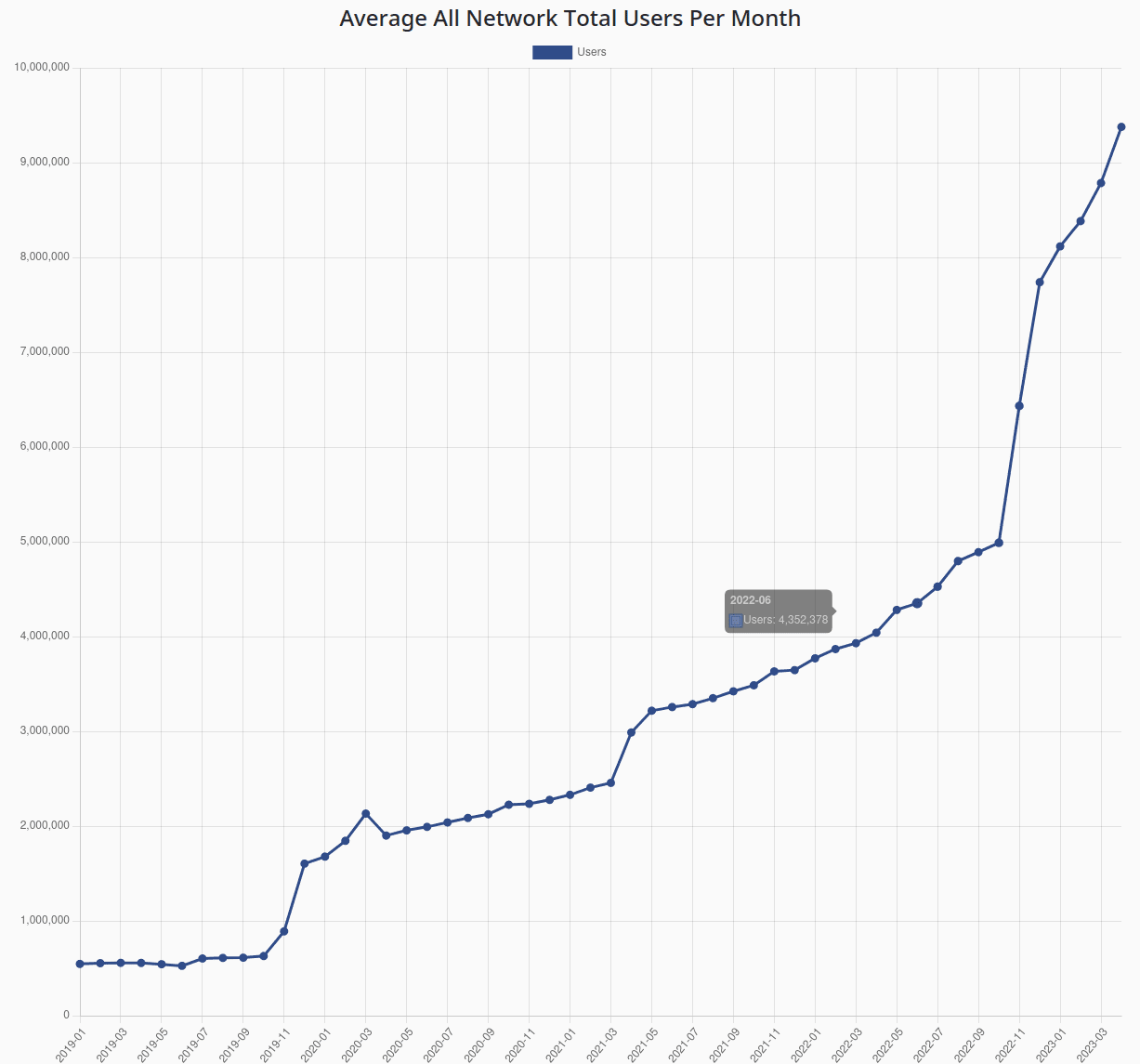
Fediverse User Growth from 2019 to 2023Fediverse User Growth from 2019 to 2023

As you can see, just since Nov. 2022 the number of users has nearly doubled in size. And it does not show signs of stopping, with literally thousands of new accounts created every hour.

And, these users are active too, as witnessed by the growth in posts since 2019, and especially since November 2022:
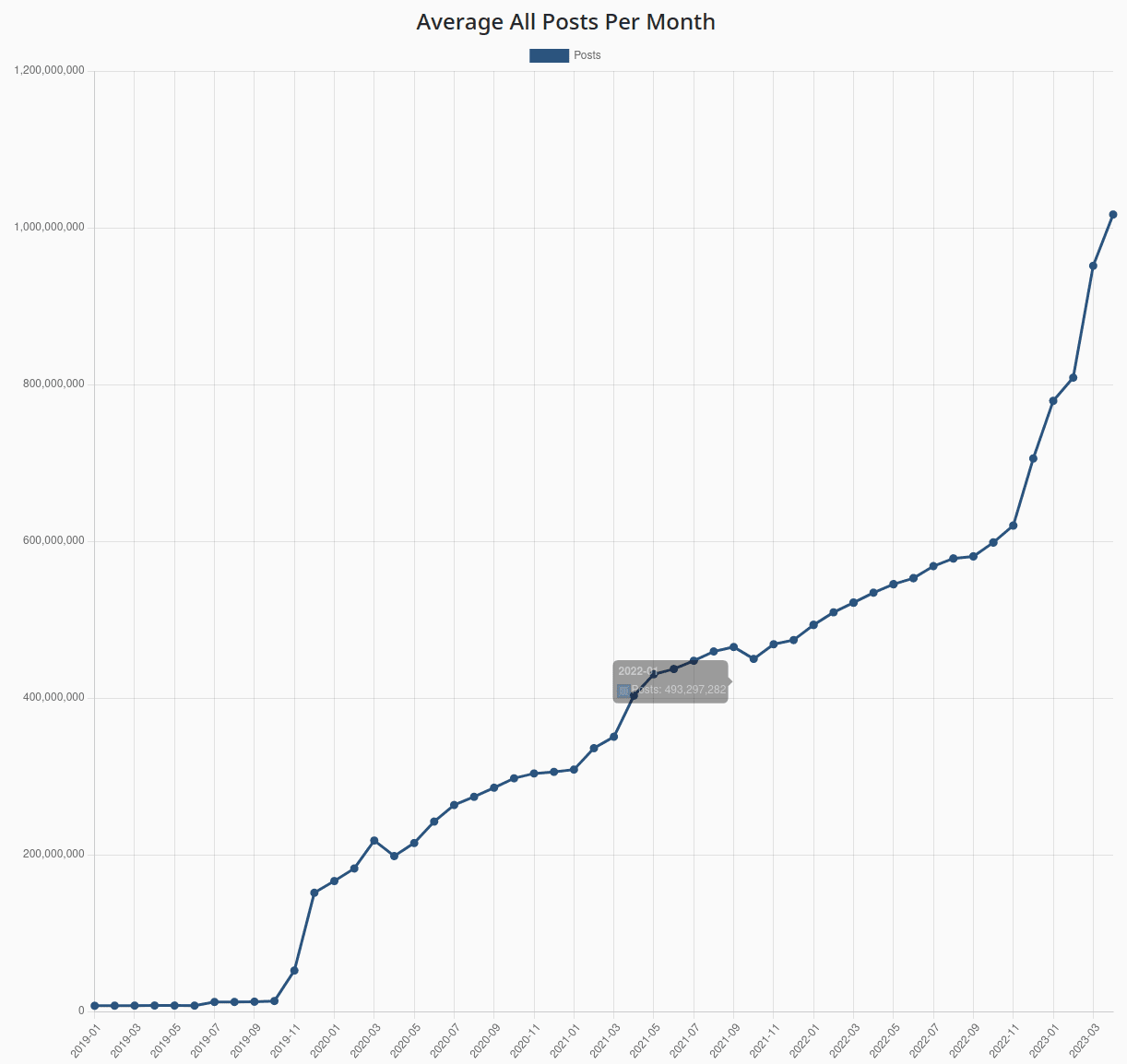
Fediverse Posts growth from 2019 to 2023Fediverse Posts growth from 2019 to 2023

Now, this is not the biggest growth that any social network has experienced. However, it is very consistent growth. This consistent growth is what should make it an appealing proposition for news organizations to get in on. This is a place where you can start finding your audience now, build and define your presence on your terms.


Defining Your Presence

As mentioned, the Fediverse has many platforms available for any news / media organization to adopt in defining their presence. Here’s a non-exhaustive list of platforms:

And more. Note that the comparisons to other social media platforms are just for reference. Each platform has its own unique flavor and objectives, they aren’t attempts at cloning the commercial products.

There are more options available as well. For example, websites that are built on WordPress or Drupal have plugins available that allow content to be published directly to the Fediverse, and can (optionally) allow responses to that content to be imported as comments on your website.

The really nice thing about all of these platforms: there are existing instances (servers) available that you can use to test out the services. You don’t have to go into Fediverse blind, you can take some time and develop a plan to bring your presence to this much more open, transparent platform.


Developing A Fediverse Adoption Plan

My recent email to NPR contained a brief overview of a plan that could be taken for building a presence on the Fediverse. The point of the plan was to make it a no-pressure situation. Small steps can be taken, and the platforms evaluated in order to make informed decisions that will make for a more successful transition and adoption of the Fediverse.

Let’s take a look at a plan that should help with a successful adoption. Note, however, there is one caveat to any planned migration: don’t compare Fediverse platforms to their commercial brethren. The reason that comparison aren’t useful is they tend to either (a) be skin-deep, and (b) they miss the real depth and usefulness of the Fediverse.

So, with that being said, here are four steps that will help make for a successful transition.

One: Join Some Existing Platforms

Your organization can start making itself known on the Fediverse by using the platforms that are already available. In particular, there are two that are dedicated to journalists and reporters:

These two platforms offer a nice starting environment for Journalists to start interacting with the Fediverse. It might seem to be slow-going at first, but with a nice introduction post, and a few posts about articles they are writing or researching, they are sure to start building a following. Many reporters / journalists from ProPublica are members of Newsie, and they have built followings in the thousands already – even the ones that haven’t posted more than one or two posts.

But, that’s an important point: they need to be active and interact on the Fediverse. There is no algorithm to recommend their accounts to anyone. Making certain they have hashtags relevant to their work in the profile and introduction post will help people find them. But, interaction is the key: being a genuine person and talking to people is the way to get a lot of value from spending time here.

Now, I mentioned Journa.host and Newsie Social for reporters and journalists. But your organization will likely want to have non-journalists join the Fediverse as well. In the “Defining Your Presence” section, I listed off over half a dozen other platforms that some will want to consider joining. I’d recommend sticking to the Microblogging and Macro blogging platforms, although something like PixelFed might be of interest too.

And, a key point to remember: you can always follow people on platforms that aren’t the one you are on. So, if you create an account on GotoSocial, you can still follow people on Journa.Host and Newsie Social, or any other instance.

There will definitely be some learning curve. But, post frequently, read through some posts under various hashtags, and interact with people, and there will be a tipping point where it all becomes a lot easier, and rewarding.

Two: Distribute Content

There are many ways to go about distributing the content you create on the Fediverse. The easy, less permanent way is to use a bot to read content from RSS feeds and post them to the Fediverse.

There are instances available specifically for this purpose, one such instance is Bots In Space. You can create accounts on this instance for each of your feeds, and set up a key to allow your RSS feeder script to publish new articles to the account. (Setting up these feeds is not something that I can explain easily in this article. However, Mastodon has excellent documentation, and there are numerous articles and examples of publishing from RSS feeds to Mastodon.)

Another way to handle this without having to set up anything is to have someone do it manually. In many cases, this is likely to not be a viable option. However, it could be a viable experiment. Say you chose to have someone post a few articles a day to an “official” account to see what kind of following and feedback they receive.

The final option is to add ActivityPub into your publishing system. Two of the more popular content management systems (WordPress and Drupal) have support for ActivityPub via plugins that are readily available. Automattic, the company behind WordPress, has hired the developer of the ActivityPub plugin and is working to implement direct support into their products.

Three: Setting Up A Fediverse Native Presence

While the first step of having some of an organization's staff use the current instances offered on the Fediverse is good, extending your organization to the Fediverse itself will have a number of long-term benefits.

For example, starting your own instance of Mastodon or another microblogging platform will allow people from your organization to have a presence that identifies them immediately with your organization. And, that instance allows you to set the standards for communication in the social world (something that is very likely already in place for your organization).

There are more benefits: you will be able to get feedback from your audience. If you choose to, you can have a customer service department as part of your presence. There are a nearly infinite number of options in this area.

But it doesn’t end there. You can add more platforms for other types of content. For example, if you have podcasts, you might want to add a FunkWhale instance. If you have video content, you might want to set up an instance of PeerTube (which would also allow you to import videos that you have already made available on YouTube). If you have a lot of photographic content, you might want to set up a Pixelfed instance.

The options are wide open. You can set up as many platforms as you want, or just have a single platform for social interaction, and use your preferred content management platform to publish your media to the Fediverse.


Conclusion

This has been a roller-coaster of an article. From taking a brief look at all the media related events that have occurred since Elon Musk took over Twitter just six months ago, to diving deeper into the Substack story and understanding where Twitter is going under Elon Musk.

The most logical conclusion is somewhat challenging. Elon is trying to make his “everything” platform, which includes trying to attract amateur writers to publish alongside well respected news and media organizations. And, in the event that a media company isn’t willing to pay the fees that Elon wants for Twitter Blue verification, then those posts are deprioritized

(As an aside, something that we didn’t cover in this story is the changes to the API’s. They affect the media too, as many of the tools that are being used likely rely on those APIs for publishing stories. So, in the case of most media organizations, this is an additional cost beyond Twitter Blue.)

This kind of “pay for play” combined with the elevation of many writers that are anywhere from amateur to potentially incompetent is something that news media organizations should not continue to endorse. And sticking with Twitter is endorsing this new “pay for play” model.

What is even worse about this model is that it allows for the elevation of messages that are reflective of the worst parts of society. And, in fact, Elon has shown himself to be perfectly willing to align himself with people that support these kinds of messages. Bringing well respected news media outlets in line with many racists, antisemitic, sexist, and other types of speech.

So, this is the inflection point for Twitter 2.0. Elon's changes are making it more obvious that there is going to be a very different structure to Twitter – it's no longer going to be a platform where all voices are equal. It's no longer where the voices that are elevated are those that the masses deem should be elevated. It's a place where you can pay to have your voice elevated.

If this is the kind of environment that well respected news and media outlets want to be a part of, so be it. For those that don't, the Fediverse is waiting. The Fediverse offers the opportunity to engage with an audience that is open and receptive to respectful reporting. It's also self-moderating, keeping the worst messaging from being on equal footing with the worst messaging out there. And, it's a place where you can choose how your organization is represented. There are plenty of opportunities in the continuously growing Fediverse.


Categories: #Technology, #Opinion #Editorial Tags: #fediverse, #mastodon, #media, #news, #socialmedia, #twitter

Originally Published: 2022-12-17 Mastodons in a Winter Landscape

Introduction

[NOTE: Quite a few things in this article have changed since it was originally published. This article is being left in its original form mostly for the history it represents.]

In Part One of this series we looked at the criticism that the signup process is cumbersome. It's a fair criticism, so we looked at the process, and I provided a shortcut for signing up. In this article we turn to the other major criticisms of Mastodon.

Since the beginning of the Twitter Exodus / Migration there have been several sites that attracted attention. Mastodon has possibly been the most impacted by this migration because of its similarity in appearance to Twitter. Of course, with this attention there will be people who are not happy about the differences that exist, and find it appropriate to criticize the platform.

Some of these criticisms are fair, however many of them actually underscore the difference between Twitter and Mastodon. And those differences, are what make Mastodon special, and in many people's opinion special. So, let's talk about these criticisms.

Too Many Instances Makes Mastodon Complicated

No, it really doesn't. Actually, having as many instances as possible is a strength of Mastodon. There are, in fact, several specific strengths that having so many instances brings.

The first strength is that individual instances can focus on building a community around a specific topic, interest, or need. For instance there are instances for writers, artists, members of the LGBTQA+ community, activists, and journalists. By having these instances it makes it easier for people who having things in common to find each other.

And, for some of those communities, it makes it easier for the moderation policies to be adjusted to handle the specific needs of those communities. For example, creating safe-spaces for members of the LGBTQA+ community.

But, there is another strength in this, with multiple instances there is a guarantee that there is no one person calling all the shots. The shape of the network is the work of multiple people who are highly motivated to make the network into something special.

The final benefit is that if you aren't happy with one instance, you aren't tied to it. You can migrate to another instance that has policies that fit you better. And, you can take your followers with you – just download them from your current instance, and upload them to your new instance.

No Single Administrator for The Network

This is something that should be seen as a major benefit given the current state of Twitter. Since there is no single person responsible for the whole network there is a better chance of actually being able to communicate with the person responsible for your instance.

When I was on traditional social media sites, there were many times when it would have been normal to actually have direct contact with someone to address an issue. But the way most of these social media companies are operated, it's only the people with the largest impact on the site that have any ability to work with a representative from the company.

However, Mastodon is different. The administrator for your instance is known to you. You can send them direct messages. They can investigate issues on your behalf. And, many times, if it is warranted the administrator will take action. Why? Because it is in their interest to do so. The Admins of Mastodon want to create the best environment they can for their users.

If the issue involves another instance, the Admin can work with the admin of that other instance. If the issue is much bigger in scope (such as an instance that is posting illegal materials, or whatever) that can be addressed at the network level — the administrators have tools for handling these things.

The fact is, by having multiple administrators, it's more likely that issues get addressed and resolved, instead of festering is some support queue for months on end.

There Are No Quote Posts / Toots

[Note: This has changed. Most platforms, including Mastodon, now offer Quote Posts.]

That is correct. There aren't quote posts. Why? Because this feature on Twitter is widely abused, and is the antithesis of what Mastodon has built for a social environment.

Quote Tweets have frequently been used to offer snarky or negative commentary on a person's post without contributing to the conversation. Instead, this often leads to dog piling, brigading and ratio'ing of the original post. This is the kind of negative behavior that is not being encouraged on Mastodon.

Instead, if you have a counter-point or argument, reply to the original post. Do it respectfully. Through directly exchanging opinions and perspectives all parties involved in the post can learn things.

Honestly, you won't miss quote-posts after a little bit.

Content Warnings Are Stupid

Admittedly, Content Warnings are controversial. There are some people that feel you should never have to use them, and others that feel they should be used more frequently than they are. Personally, I find there are times to use them, and times that they probably don't need to be used.

So, how do I approach this? There are two times that I will use them:

  1. When talking about more sensitive topics, like SA, Self harm, politics, religion, etc. This one is a little bit tricky to know when to use them – but when you participate in these kinds of topics you get a feel for when it is appropriate. Rule of thumb: if something could be a trigger, it's a good idea to use a content warning...

  2. When a post might cause problems for people using assistive technology. One that was pointed out to me recently was posting Wordle results. For people using screen readers it's horrible to hit one of those posts... They have to listen to “colon <emote name> colon” repeated thirty times. It gets worse if you post other similar games along with Wordle (like SquareWord or QuadWord).

So, while Content Warnings aren't the most obvious feature to use – there are times / contexts in which it makes sense to use them.

There's No Verification

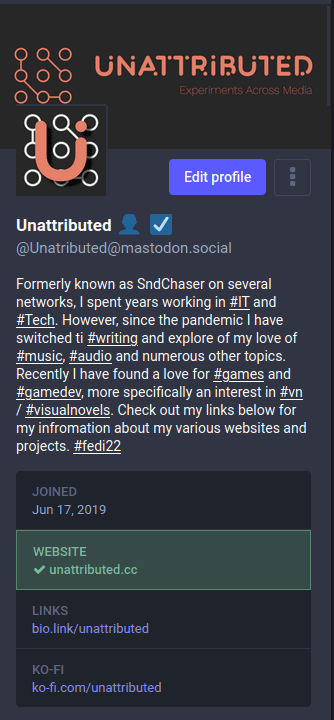
There is no formalized verification. However, there is a way to link to other presences you have on the Internet. For example, my Mastodon profile shows the following:

Screenshot of profile with highlighted website link

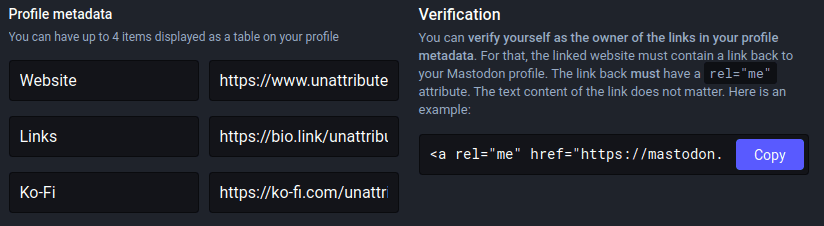
The green highlight is the verification that I have control of this website. This was done by inserting a link into this website's code that links back to my Mastodon profile. How this is done is found in the Settings->Profile for your Mastodon account:

Verification instructions in Settings-&gt;Profile

We are starting to see other services pop that offer verification of this type. For example, tonight I found PressCheck, which provides credentials for journalists that have moved to Mastodon, and provides this same back-link to their profiles.

Inconsistent Moderation Policies

Now let's be clear about something. All the Mastodon instances that are listed on the official Join Mastodon website have agreed to the Mastodon Server Covenant. This is a requirement to be allowed to have an entry in the database.

Beyond the Mastodon Server Covenant, the administrators of each instance are at liberty to implement moderation policies / rules that are the best fit for the community that they want to build. This flexibility is actually powerful and important in the Mastodon network. This allows Administrators to do things like create safe spaces for members of the LGBTQA+ community. It allows administrators to choose whether NSFW content is allowed or disallowed on their instance. More importantly, it allows them to set the policy for how these rules are enforced.

When you go to sign up for an account you are shown the rules for the instance. It's typically a fairly short list that doesn't take long to read. If you don't agree with something in the rules, find a different instance with rules you don't have an issue with.

If you create an account on an instance, only to find you don't like the way it is being run, you are free to migrate to another instance. The Mastodon documentation as a whole section on Moving or Leaving Accounts.

Finding people isn't as easy as other social sites

Is finding someone on Twitter easy when you don't know anyone? Not really. But with Mastodon it really isn't more difficult. There are a few things you can do:

  1. You can use tools like Debirdify or Movetodon to find others who have migrated from Twitter to Mastodon.
  2. Adding “Featured Hashtags” to your profile will help in curating you home timeline to include content that is likely to be of interest to you.
  3. You can follow a hashtag, just like you follow other users. Just search for the hashtag, and above the results will be a little button to follow the hashtag (it looks like the follow user button).

So, there are ways to find people on Mastodon, by actually looking for the content that interests you.

Direct Messages aren’t really direct messages

They are direct messages, but it might not be quite the way you think of direct messages. On Mastodon a direct message is one that is sent between you and the people you list / mention in the message.

Think of it this way... Email allows you to have direct one-on-one communication. But, if you CC or BCC someone, then that person is able to take part in the conversation as well. Mastodon's direct messages work in this same manner.

Direct Messages aren’t private / encrypted

As explained above, Direct Messages are (mostly) as private as you make them. Yes, an administrator could potentially see your private messages, but they generally would not be likely to look at them unless there is a specific need to.

As for messages not being encrypted.... Guess who else doesn't have encrypted DM's? Try Twitter. Encryption of DM's has been a feature they have tried to add several times. However, they have found that the need to have some kind of personal information for generating the keys to encrypt the messages to be a stumbling block.

In general, outside of messaging applications that specifically offer encryption (like Matrix and Telegram), don't expect your Direct Messages are encrypted.

Conclusion

If you have read this far into the article, congratulations! Hopefully you have a better understanding that many of the criticisms of Mastodon aren't really bad things. They are just differences between Mastodon and Social Platform X.

In many cases, the choices that have been made for Mastodon actually make it a more powerful and flexible network. For example, having so many instances and different rules / moderation policies make the communities of that instance stronger and/or safer for the users of that instance. And, having so many Administrators means that you have more access to the person(s) running your instance.

In some cases things are just different, like the way Direct Messages work, the use of Content Warnings, or how you find people to follow and talk with.

None of this is to say that there isn't room for improvement, or other features that can be added to the system. For example, adding encrypted direct messages is a desired feature that is likely to be addressed by the developers in the future.

One of the exciting things about being part of the Mastodon network is that you can have some influence in its direction. The developers are aware of things that are talked about / requested. And they look for ways to add features that satisfy the needs of as many users as possible.

In the next part of this series we'll try to get you up to speed on using Mastodon. We'll offer a series of etiquette examples for Mastodon (such as the one I touch on here regarding the use of Content Warnings), and then move into some of the power-user tips (such as following hashtags).


Categories: #Technology #Features Tags: #mastodon #socialmedia #socialnetwork #twitter #twitterexodus #twittermigration

Originally Published: 2022-12-16 Mastodon Drawing

Introduction

With the recent upheaval at Twitter many people have decided that it's time to find a new community. While numerous sites have grabbed people's attention including Post News, Hive, Tumblr, etc. My choice is: Mastodon. However, as is always the case with something that is new, there are questions and concerns that people have with a new community.

And, that is expected. Not all social networks are designed the same way, they each have their own flavor. While Mastodon bears a similar look to Twitter in some respects, there are quite a few things that are very different about it. These differences range from how you sign up, to how you find and interact with others, to how you (and the moderators) deal with bad behavior.

So, what are the best ways to get on to Mastodon, and how can you make it into a meaningful experience for you? That's one of the topics we'll explore in this series of articles. The other topic is: dispelling some of the myths that have arisen with the rise in popularity of Mastodon.

Migrating To Mastodon Issues

The most common criticism of Mastodon is that it is difficult to get started. This stems from the fact that some people find the sign-up process to be difficult. The irony is that the current sign-up process was intended to accomplish a couple of goals:

  1. It was designed to make it easier for new users to find groups of people that share common interests.
  2. It was designed to make the distribution of users, and therefore the load / usage of the instances more even.

However, the criticism of this system is not without merit. Sites like Twitter, Facebook, TikTok have a simple signup process because they are a single, monolithic service run by a single entity (typically a business). Mastodon isn't a single entity, it is a collective of entities spread throughout the world that chose to interoperate in the Mastodon Federation.

So, let's take a look at starting a Mastodon account and getting started.

And, if you find that the process is getting a bit too involved for you, scroll down to the section A Faster Way.

Signing Up For Mastodon

There are two ways to sign up for Mastodon: (1) via the official Mastodon App on Android or iPhone, or (2) via the Join Mastodon website. The second method will apply to people using third party apps (like Tusky, Tooot, Fedilab on Android, and Tootle, Metatext, Tooot on iPhone).

Using the Official Mastodon App

Mastodon Mobile App

Signing up using the Official Mastodon App is less complicated than it has been portrayed as. The biggest confusion tends to come from the need to select an instance.

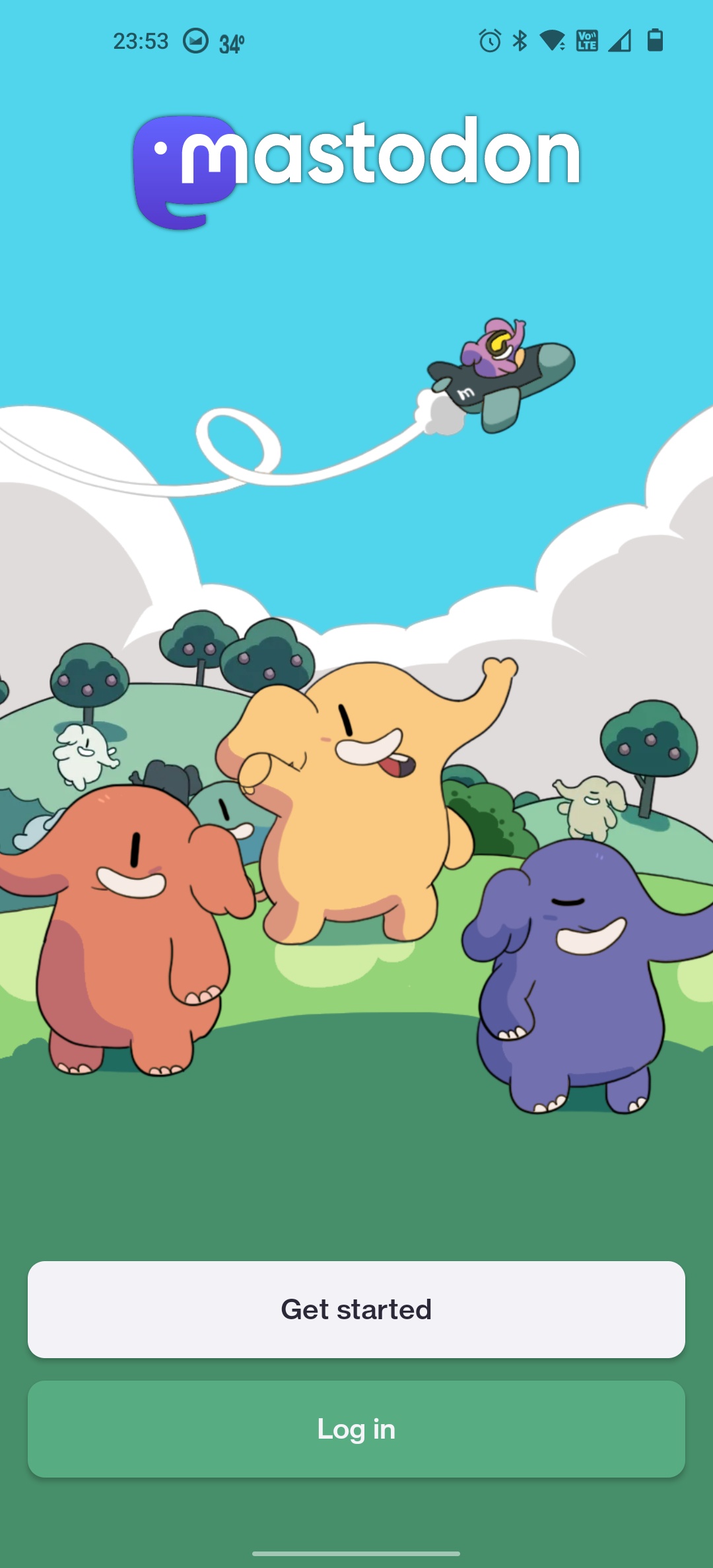
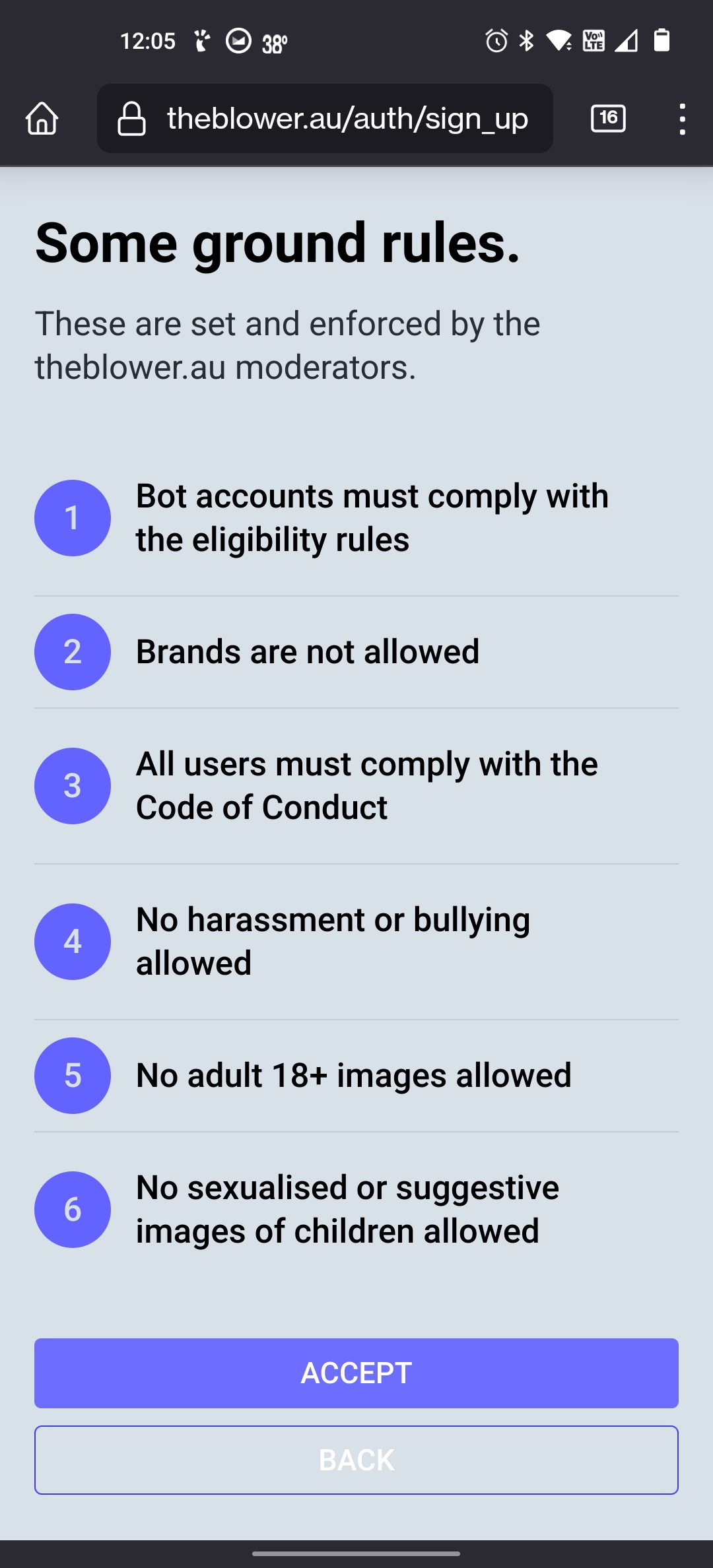
The start screen (see image 1) for the application offers two options for you at the bottom of it's screen: “Get Started” and “Log In”.

Log in is for users that have already created an account on Mastodon. (It is also used if you decide to change the server that you are logging into... More about that later in the article.)

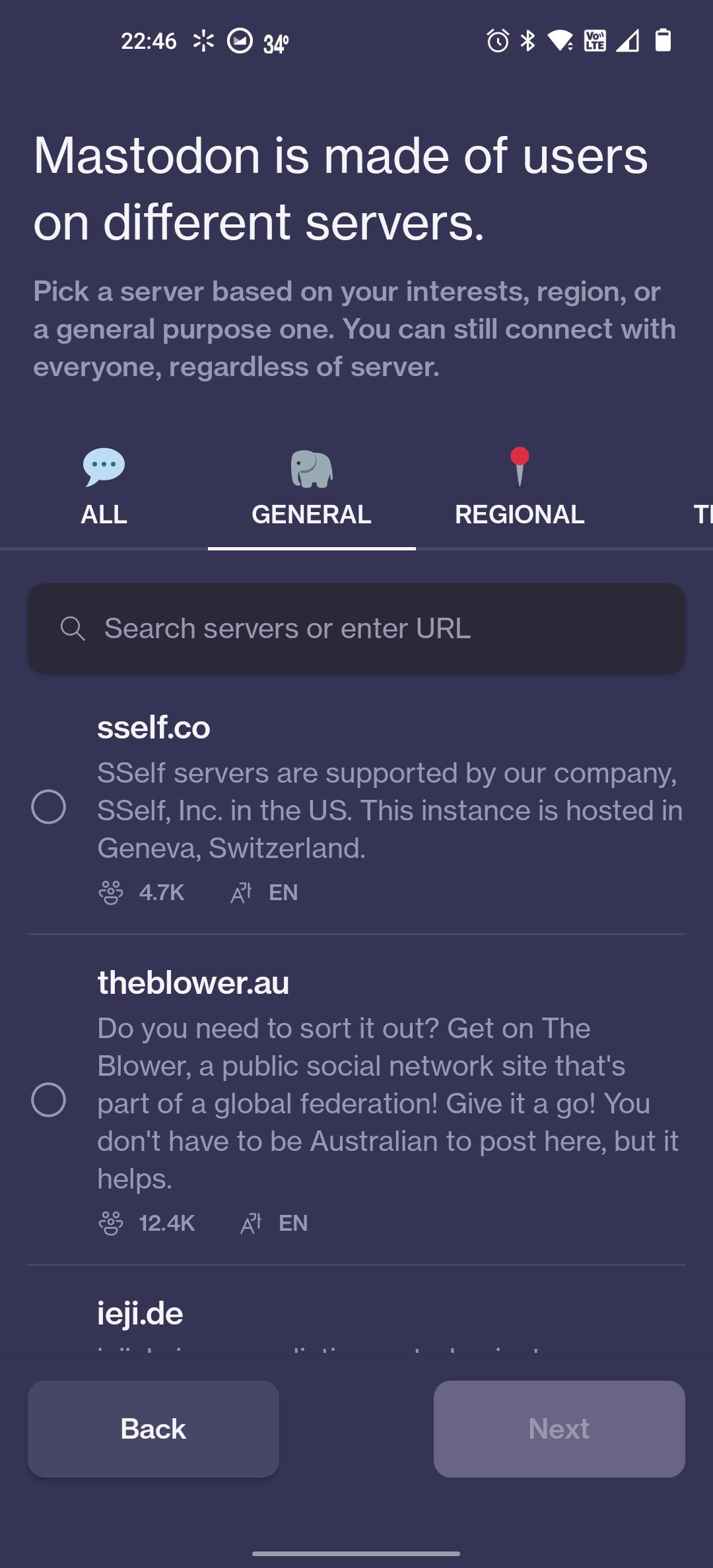
The Get Started option is the one that you will want to select as a new user to Mastodon. Once you have selected the Get Started button, you will be presented with a new screen (see Image 2). This is the instance selection screen:

Image 2: This is the "select an instance" page.

The easiest way to navigate this screen is to select “General” from the options, and then select any server that sounds good to you based on the description. The one consideration that might be a determining factor for you is language. The majority of servers are English, however, there are some for languages like Gaelic, Japanese and that rarest and strangest language: Australian. (I'm just kidding...)

Once you selected an instance, select the Next button. This will bring you to the following screen (see Image 3):

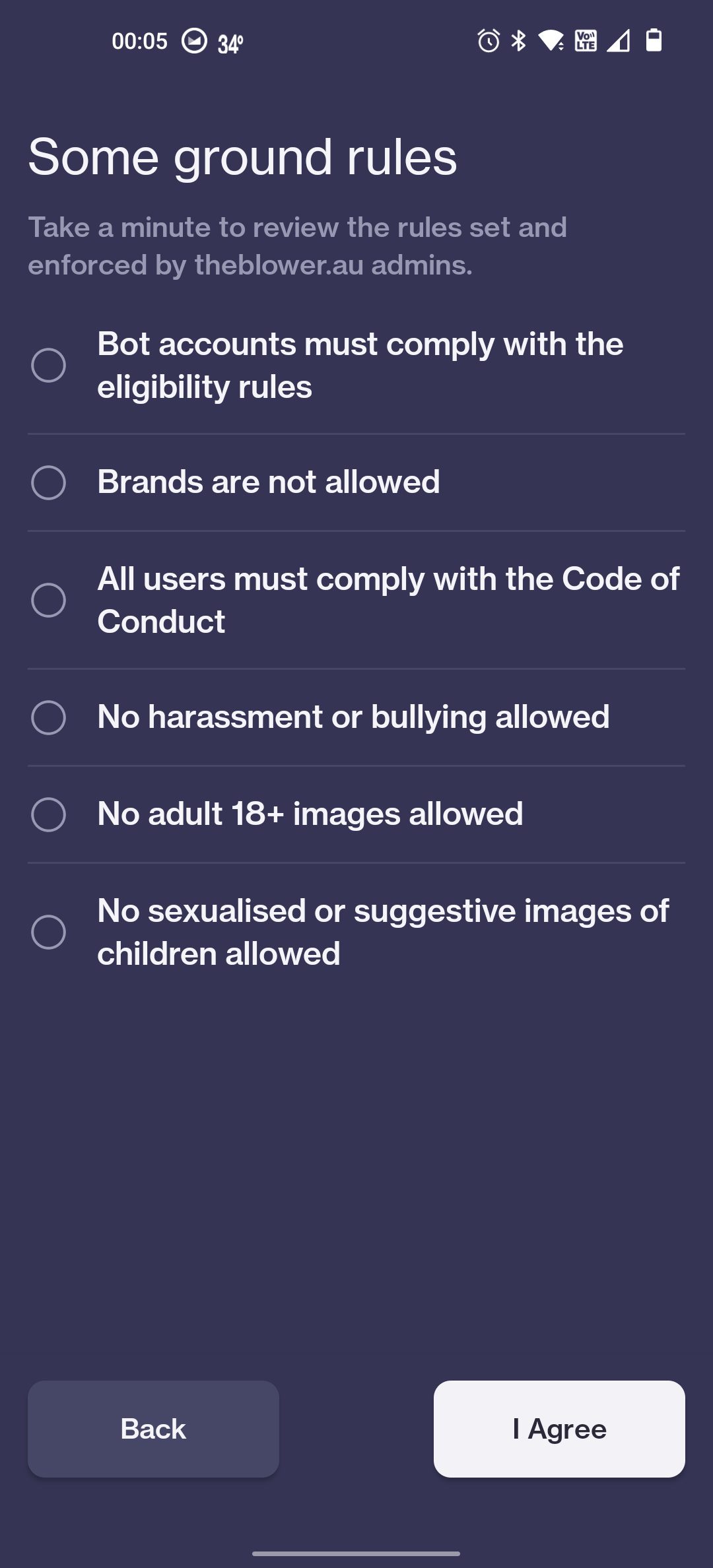
Image 3: Rules for the Instance You Have Selected

Take a moment to review the rules of the instance you have selected. If you agree with them, Great! Click the I Agree button to move forward. On the other hand, if there is something in the rules that you don't agree with, click the Back button to select a different instance.

Once of you have agreed to the rules for an instance, you are presented with the following screen (see Image 4):

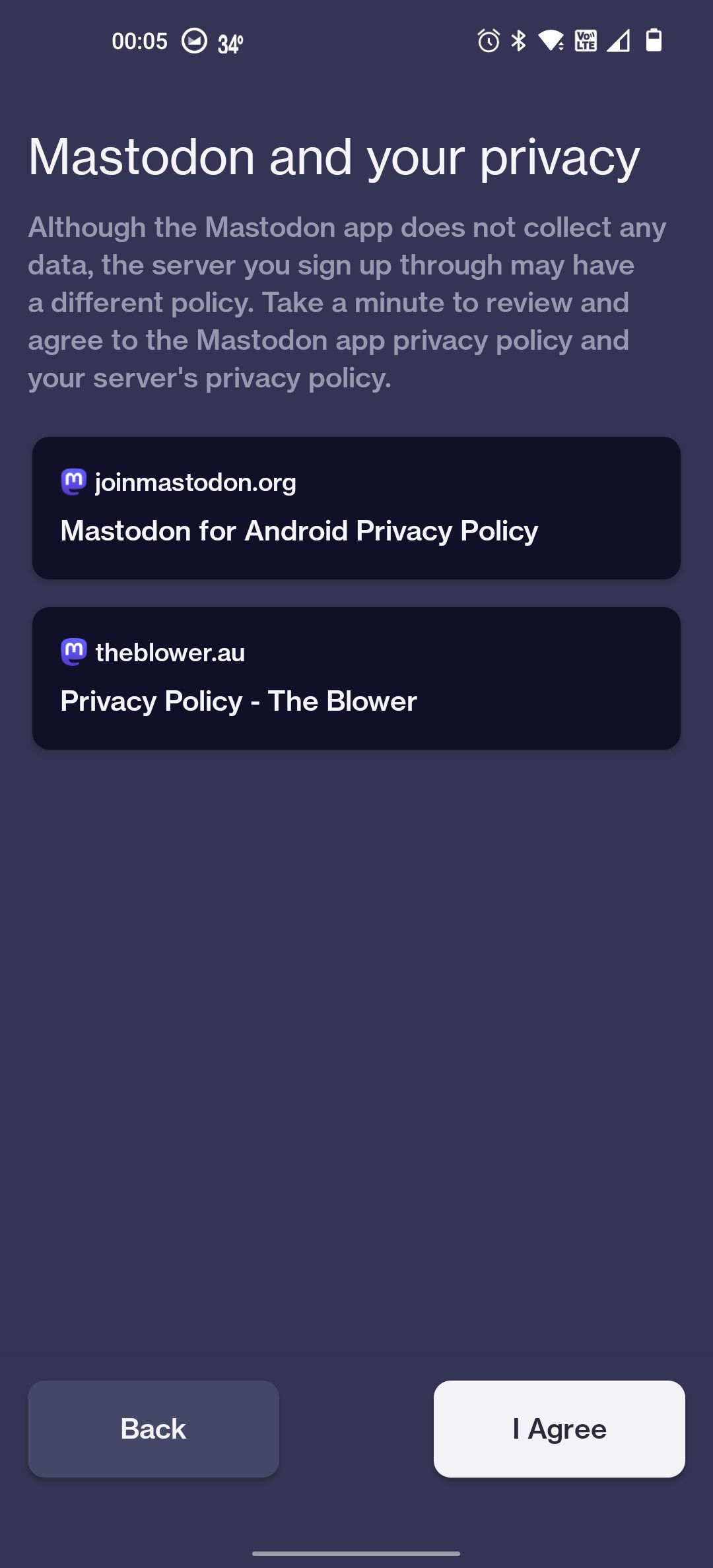
Image 4: The Privacy Policies

This screen presents you with the opportunity to read the Privacy Policies for both Mastodon App and the instance you have selected. I would recommend reading these, although I know many people don't since they are typically full of all sorts of legalese and jargon. When you are ready, click the I Agree button.

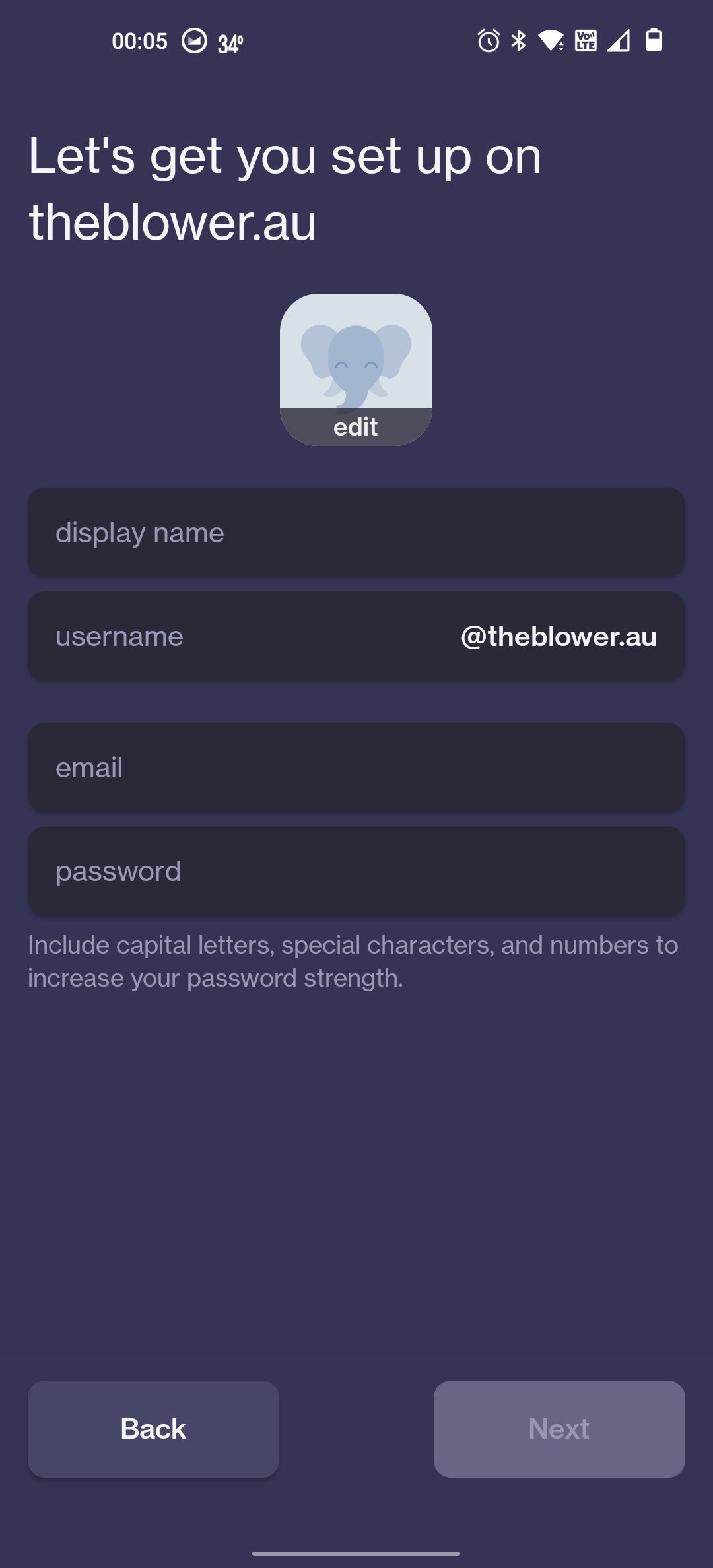
And, you are taken to the final screen (see Image 5) – the account creation screen:

Image 5: Account Creation Screen

This will hopefully look a little more familiar. You fill in the form, select an avatar, and click the Next button to complete the signup on the instance you have selected. From this point on you will be on Mastodon and can start looking around, finding people to follow, etc.

Using The Join Mastodon Website

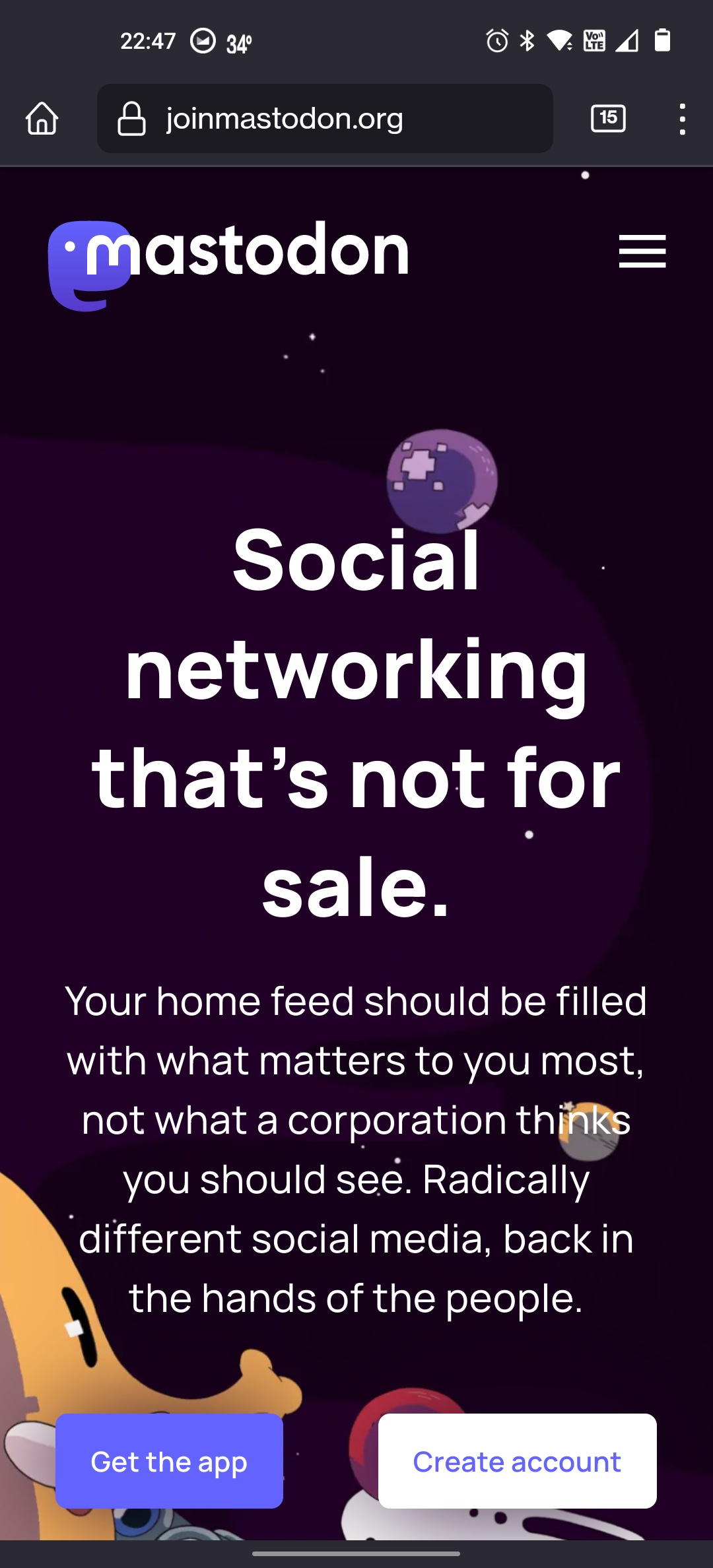
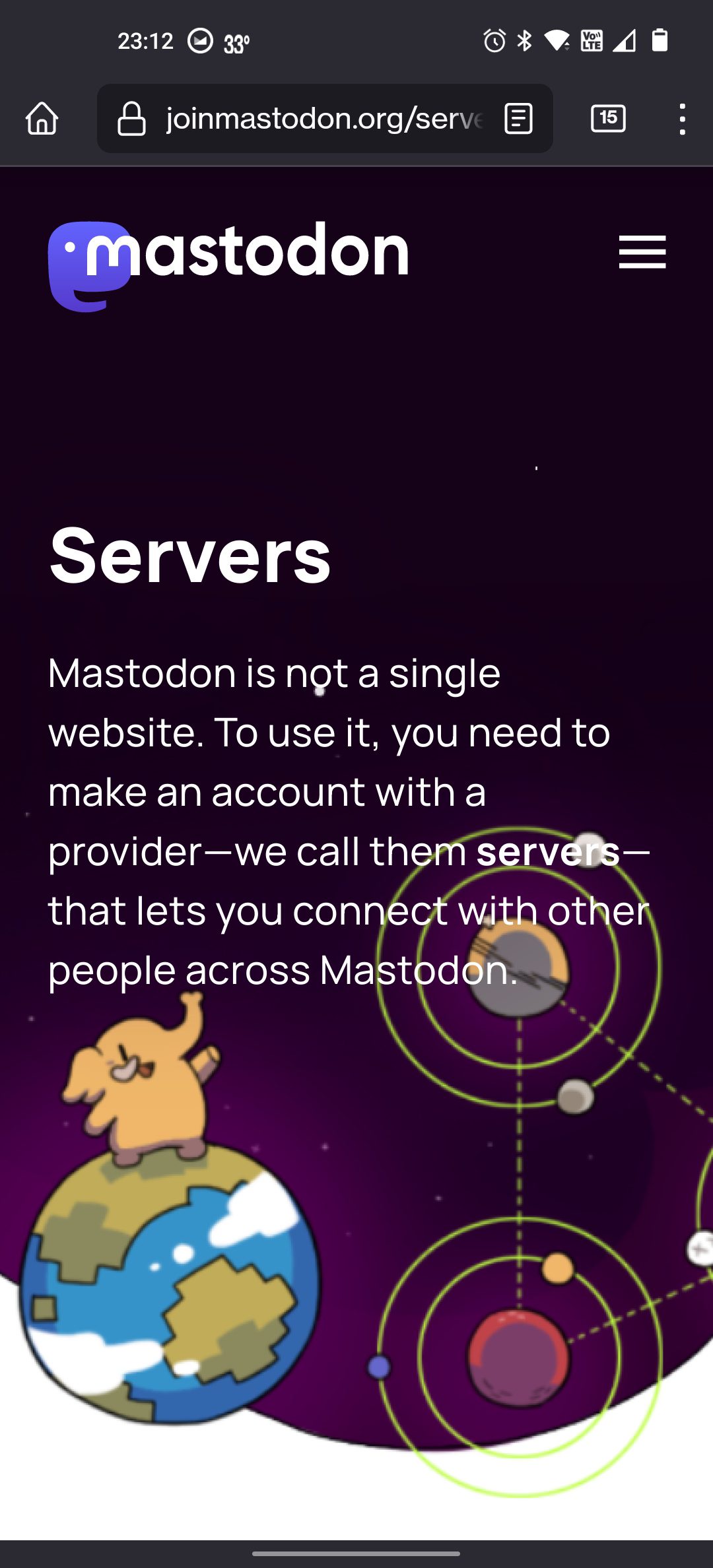
Using the Join Mastodon website is a similar experience to using the official Mastodon App. When you go to the website you will see the following page (see Image 6):

Image 6: The Join Mastodon Web Page

To get started click the Create Account button, and you will be taken to the following screen (see Image 7):

Image 7: The Instance Selection Page

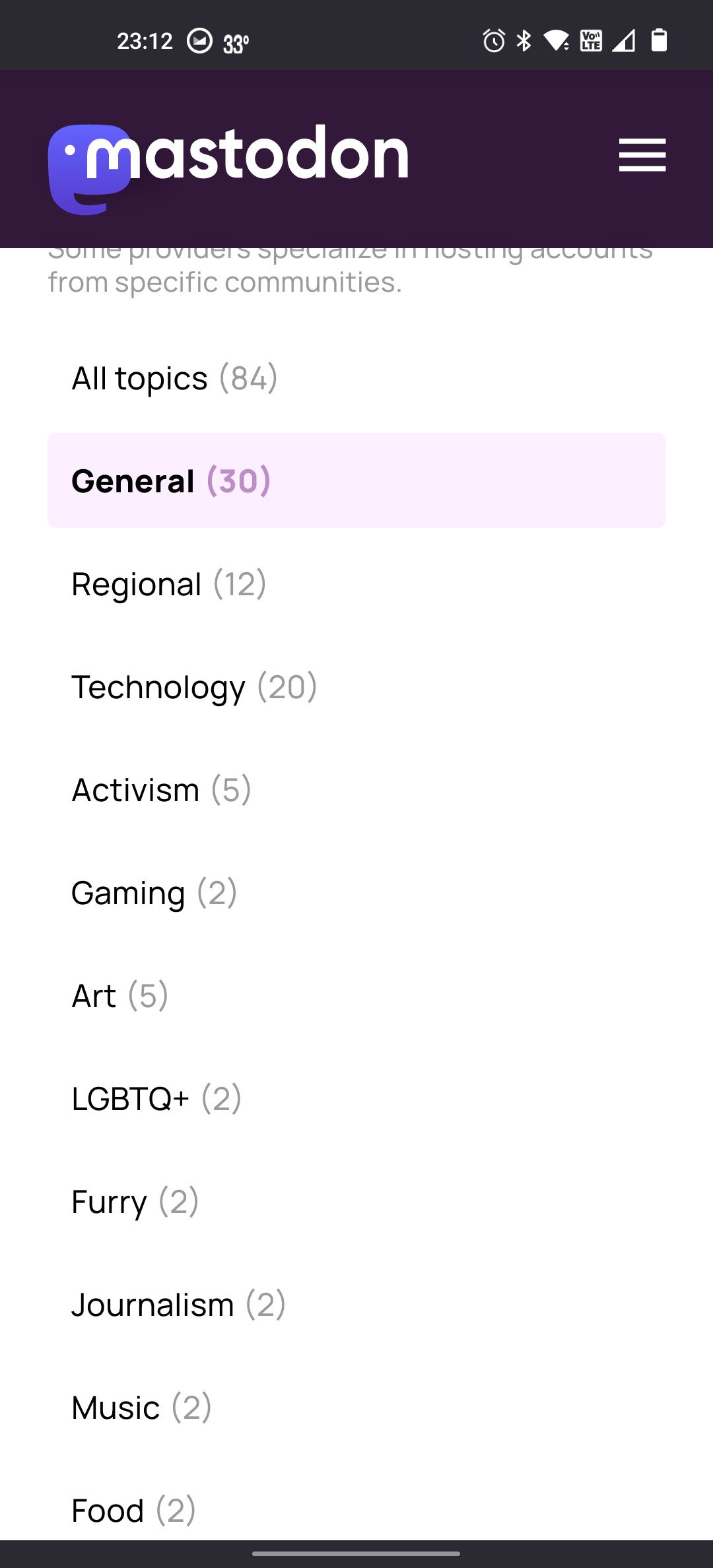
This is the page where you will select your instance. First we want to scroll down to the Topic section of the page (see Image 8):

Image 8: The Topic Section

In this section select the General topic. This will cut the number of servers to less than half of the original list. Note: there are a few categories for special needs you might want to consider, like LGBTQ+ and Activism. These will provide fewer options, but possibly more supportive communities.

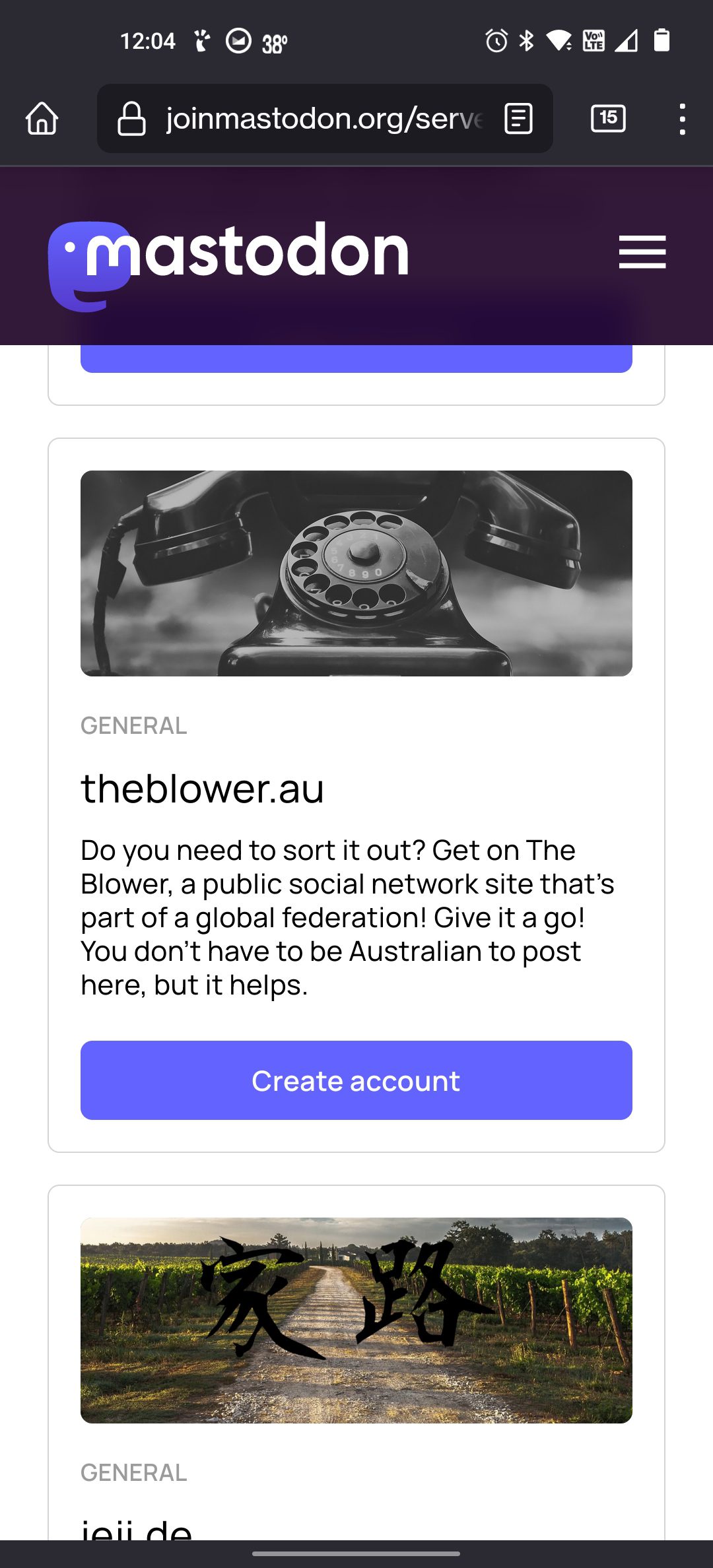
After making your Topic selection, scroll down to pick an instance (see Image 9):

Image 9: Selecting an instance

When you find an instance that sounds appropriate for you, click on the Create account or Apply for an Account button. There is a difference between these two buttons, which do need some explanation:

  • Create Account allows you sign up and log in automatically. Most of the instances in the General category offer instant access.
  • Apply for an Account is used on instances that do a brief screening before granting you access. This is mostly used for special interest servers to make certain that the person is applying for the best reason. For example, the Activism and LGBTQ+ want to be certain that new members won't log in just to attack other members. In some cases the Apply for... button is just used to control the rate at which new users are added to the instance.

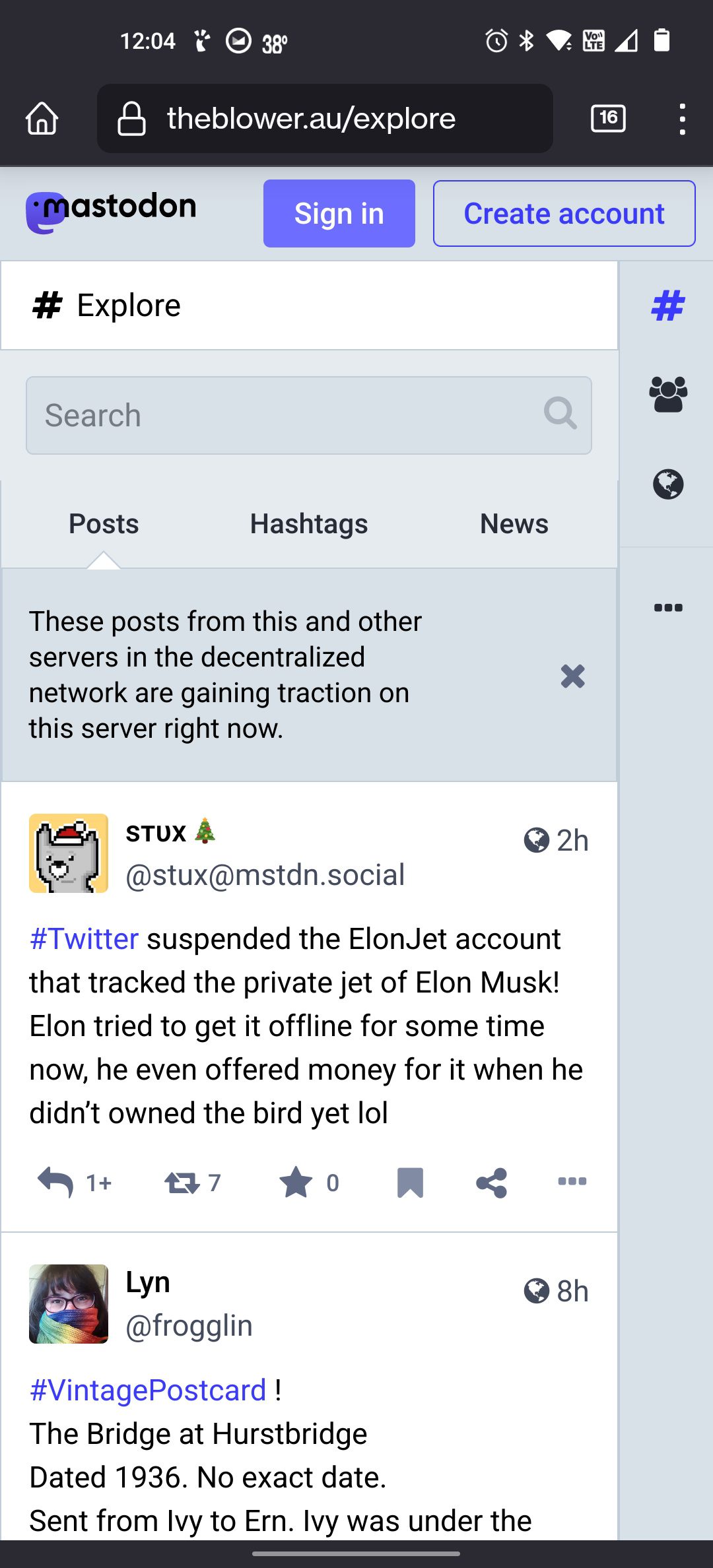
So, once you select Create account or Apply for an Account you will be taken to the instance you have selected (see Image 10):

Image 10: The Instance Website

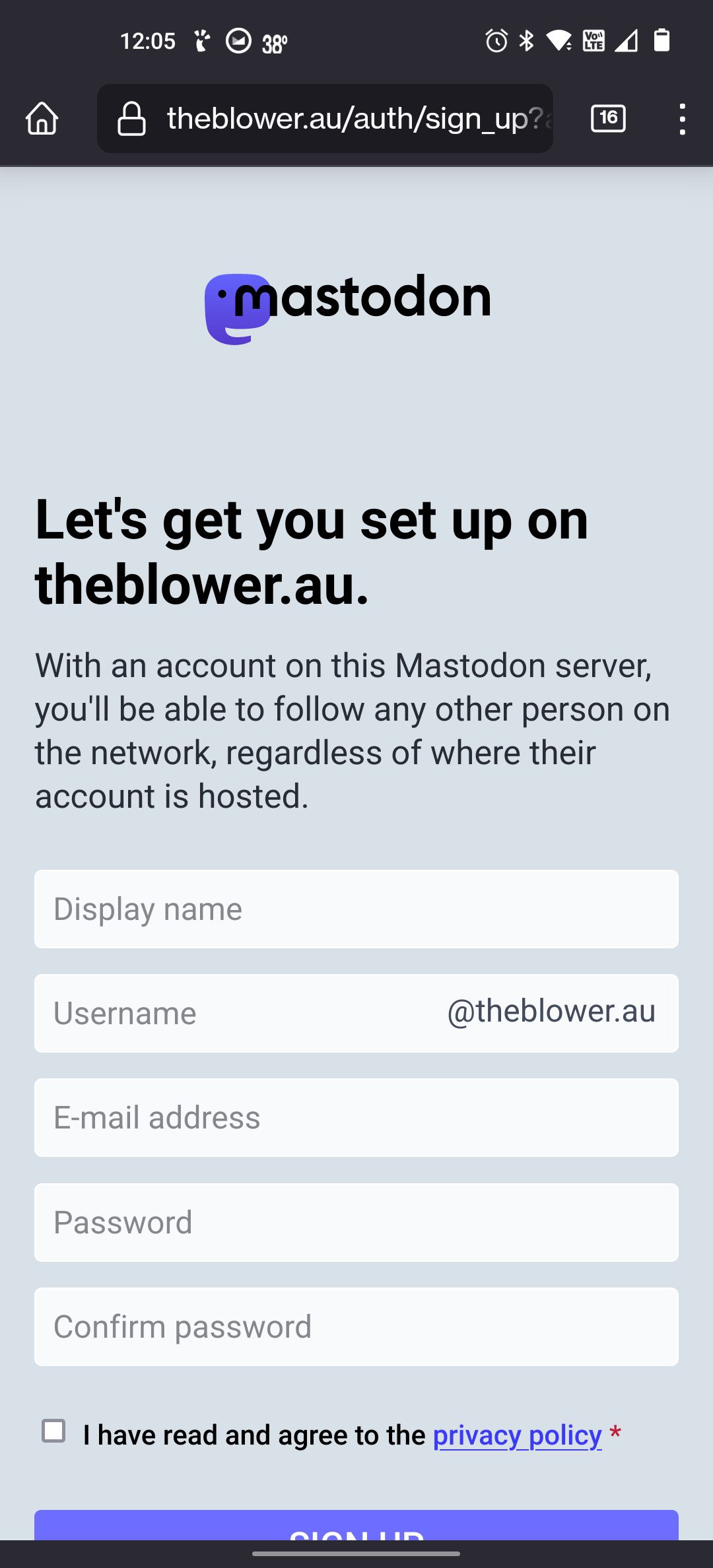
On this page you can look through some of the posts that have been made on the instance recently. When you are ready you can select the Create account button to proceed. You will be shown the rules of the site on the next page (see Image 11):

Image 11: Instance Rules

Once you have accepted the rules, you have reached the for creating your account (see Image 12):

Image 12: The Signup Page

And from this point, it's basically the same process as signing up for most other Social Media type websites. You supply a display name, username, email address, and password. Review the privacy policy, and click the Sign-Up button. From this point on you'll follow the instructions to get started with your new Mastodon account.

A Faster Way

So, as I stated before diving into the signup walk through: there is merit to the point that the signup process is complicated / cumbersome. However, there is a workaround for this: skip the part that makes you go through the Join Mastodon interface, and just jump to an instance and create an account. But how can you do that? Well, here's a quick list of some instances that are good general chat instances that you can get started on:

Yes, there are lots more instances to choose from, however these instances are good starting points. Once you get comfortable with Mastodon you can migrate to another instance if you wish (there are instructions in Mastodon's settings for how to migrate).

Once you have signed up for your account, you can use your address to sign in to any app that you have installed on your phone without going through the long process of using the Join Mastodon website.

Conclusion

In this first in a series of articles we've looked at how to sign up for Mastodon. It is admittedly a cumbersome process, but one what was designed to be more flexible and allow new users to select an instance that is the most appropriate for them.

Having considered the signup process, I've included a shortcut list of a half dozen instances that are good places for signing up and investigating what Mastodon has to offer.

In the next article in this series, I'll address some of the other criticisms that I've seen in the press. Having considered those criticisms, we'll move on to discussing what makes Mastodon different from other social media websites.


Categories: #Technology #Features Tags: #elon #elonmusk #mastodon #migration #riptwitter #socialmedia #socialnetwork #twitter #twitterexodus #twittermigration

Originally Published: 2022-043-30 A group of people clinking their glasses together in a celebration toast.

Introduction

Welcome to the start of the new Unattributed website. If by some chance you had stumbled on this website in the past, you might know that it used to be a Tumblr blog. At that time the idea was to share interesting things I found around the web, along with a few of my personal creations. Basically it was a large open bookmark compilation.

Now, however, it's time to move on. The reason for moving on to something else has come about for several reasons:

  • I'm feeling more inspired by the myriad of random information around me.
  • My approach to the internet and more specifically social media, has changed.
  • It was time to revive my websites after several years of hibernation.
  • I needed / wanted to consolidate my sites.

So, let's take the time to explain all of this for the rest of this article.

Getting Inspired

Make anything illustration Photo by Duncan Kidd

Over the past two years I've spent a lot of time doing two things: consuming a lot of media, and writing. This came about for a couple of reasons: the first was my task of taking care of a terminally ill relative, and was followed by the pandemic. But those weren't the only reasons. There were also issues like nearly all of my technology dying within two months (literally my desktop computer, laptop and cell phone), just when a lot of technology became very difficult (or very expensive) to get a hold of. And then there was the 8–9 months spent dealing with the estate of the relative I had been taking care of. Overall, you could say that 2020 wasn't all that great (or productive) of a year for me.

However, I did get to do a fair amount of thinking, planning, writing. This was something that I hadn't really done for quite some time since most of my plans had to center around other things in my life. It wasn't really mine to direct.

The thing that was a real changing point for me, however, came when I was able to start getting some technology together again and started actually working on this. The big things were: (a) I organized a lot of information that had been spread all over the place, (b) I started working on how to put together a work flow for myself, and © I started actually gaming.

Now, gaming might not seem like a big deal. But for me, well, I generally hadn't been much of a gamer before. And I'm still only into lighter games: turn based RPG's, visual novels, simulations, etc. But the thing is this: for me, it served as something on an inspiration, how? It's given me a chance to experience narratives differently. I've long known that games have their own way of presenting narratives. One of the things that I had started consuming quite a bit over the past several years was gaming content on YouTube (in particular Minecraft content, which is now my favorite game).

So, basically, I found that I have more inspiration now: I have a new perspective on things, I have a ton of materials that I've built over an extended period of time (my email archives are around ~2500 messages per year over the last 10 years, my “knowledge” database has over 1000 documents, and I have a bibliography database with hundreds of references in it), and I have a desire to explore a bunch of different concepts and topics in as many forms as I possibly can.

The Internet and Social Media

The Social Media Internet

Partially because of the responsibility to take are of my relative, partially due to limited access to the internet, and partially doe to the failure of most of the surrounding technology, I ended up leaving the internet for a couple of years. More specifically, leaving social media. And I don't regret it. I've come to realize that the time spent doom-scrolling on Twitter, trying to checking things out on Instagram or TikTok, and playing attention games that social media pushes are quite damaging.

The thing is, I've realized that I tend to not function all that well in the social media landscape. The idea that one is trying to come up with short pieces of information that will grab and sustain the attention of thousands or millions of people is just a game I don't do very well. Instead, I function in the world where there is more deliberate and considered thought given to things, or there is a bigger narrative. Consider my approach to be a novel to social media's micro-fiction.

That being said I have found there are some platforms that I tend to like using a bit more: typically these are forums. Forums tend to work better for my because they are specialized in a specific topic, and most of the expression can be more complete than trying to cram something into 250 characters. But as with all things, having something like Twitter is useful at times for more interactive communication: Mastodon is filling that role now. Reddit is also okay to some degree, depending on which Subreddits you are in. PixelFed is a suitable Instagram replacement, not a lot of people posting fancy (fake) influencer shots, just people sharing their pictures / drawings / etc.

The point is: I don't use the social media the way I was before. Now I tend to focus on the things that I want to do, and occasionally pop my head onto a social platform when I want / need to. That's led me to be much more relaxed than I used to be.

Out of Hibernation

Close-Up Photo Of Yawning Cat Photo by Anna Tóth

This is where things get a bit on the geeky side.

Once I knew that I wanted to start working on my websites again I had to make some decisions. There were some things that needed to be addressed:

  • I wasn't happy with the software I was using.
  • I wasn't pleased with one of my hosting services.
  • I needed to move off the free hosting that I was using for some of the sites.
  • I needed to simplify some aspects of managing all my sites.
  • I needed to drop a service(s) that I don't trust.
  • And finally: I needed to re-design things into a workflow that I could work with.

There's a lot more technical details that go into this. I spent quite a bit of time evaluating options before I finally came to a decision. And things actually didn't go quite the way that I expected:

For example: the software. That was actually a sticking point with me. I wanted to get off the software that I was using due to changes making it more difficult to use. And I still feel that way. But there were other things to consider: I've been using this software for nearly a decade at this point. Some more recent changes are actually positive (but they don't undo the negative changes). Looking at other options, I didn't find one that I felt I would be comfortable with (and I went so far as to set up local instances of them and tried porting one of my sites to them — so I put in some time doing serious testing).

The hosting situation was probably the more annoying issue. The host I've been with now for 10 years. I didn't want to hit that milestone. I actually started shutting down services with them several years back, but hadn't finished. So now it was time to start doing research all over again. Fortunately I found a service that can host all my sites, and should cost around as much as it previously cost to host one site. This new hosting service also simplifies a lot of management side of things, and has features that my old hosting hadn't figured out how to do in 10 years (like having staging areas for working on updates).

Services being dropped: I'll be blunt about this one, it's Google. There are just more and more things happening around them that make them a potential liability. A couple of quick examples: Google Analytics is not compliant with recent EU directives, and there is potential liability in using Google Fonts API's. This isn't a matter that I take lightly. I personally haven't been a huge fan of Google for a while now, I don't use their search engine, I try to turn off as much of their stuff on my phone and tablet as possible, and I've been trying to get rid of their analytics everywhere. Also, I've been moving all of my domains to a different registrar (previously some of my domains had been registered with Google out of convenience). So yeah, that's actually a pretty big one.

The thing that I haven't folded into this yet: my approach to social media and the internet. One of the things that I decided when I left social media was to not try to chase things around anymore. I want to focus on my work and not on trying to chase status online. And yet, I still want to get these sites seen by an appropriate audience. Well, it turns out that the Fediverse (which Mastodon is part of) has an answer: they have a publication protocol that can be integrated into these sites...when an article is published the Fediverse will get a copy of it, and it will just look like another Mastodon / Friendica / etc. stream that people can follow.

So that makes a lot of things a lot more streamlined. Sure, I probably won't have “the reach” that other sites have, or that I had in the past. But honestly, that doesn't make a difference, I know that the people that are interested in my work will find it and be able to follow it in a way that is convenient to them.

Conclusion

So, yeah, this was a long way of saying a lot and a little at the same time. Basically, I've given a long explanation of how I have gotten here. What this new beginning is and how it came about. The thing that I am most pleased with is that I have an idea of the things that I want to do. I've found my inspiration again, and I have a lot of ideas that I want to pursue. This site is my opportunity to talk about the things I am pursuing, and present some of the research and information I'm learning along the way.

I'm also happy to have found a way to streamline a lot of these endeavors. Between having a hosting service that helps to pull things together, to finding tools to publish these articles to the Fediverse, there is a lot of time that I can spend working on the articles ant to write, the research that I want to do and dive headlong into any random rabbit holes that I want to.


Categories: #Technology #Features Tags: #celebration #inspiration #revival #socialmedia