Unattributed

I would like to supply a TLDR; for this document, but it's too long for there to be a simple summary. The closest would be the conclusion of the article, but there is a lot of information along the way that would be lost if you jump to that. Therefor, if you clicked on this article, I would recommend reading it completely.

Introduction

I read Jola's article The social contract of writing the other day, and was impressed by their well reasoned arguments. I then read the response from Segun Famisa: No. You can't tell it was written by AI, and felt that it was quite a bit off the point.

Jola's primary arguments were:

  • The use of LLMs are homogenizing writing. Their repetitive use of specific idioms and patterns that are frequently occurring. Like, statistically too frequent to be an anomaly.
  • Even if you don't use an LLM in your writing, you are being caught up in the blast-radius of LLM written works. These works have been tainted are affecting how you write.
  • Writing that is assisted by the use of LLMs is a violation of the social contract between the author and their audience.

Segun, on the other hand, seems to have disagreed with concept that LLM assisted writing can be identified. He makes the arguments that:

  • The tools used to identify LLM written works often fail.
  • In order to judge a piece of writing you need to know the author of the work to determine if they wrote it.
  • The reason for things like em-dashes, and unusual vocabulary is due more to the social background of the people who trained the LLMs.

There is a lot to be said about both of these pieces. I have some things that haven't been considered to toss into the discussion surrounding the use of LLMs in writing. And, along the way, I want to rebut a couple of the arguments that have been made.

I Am the Author

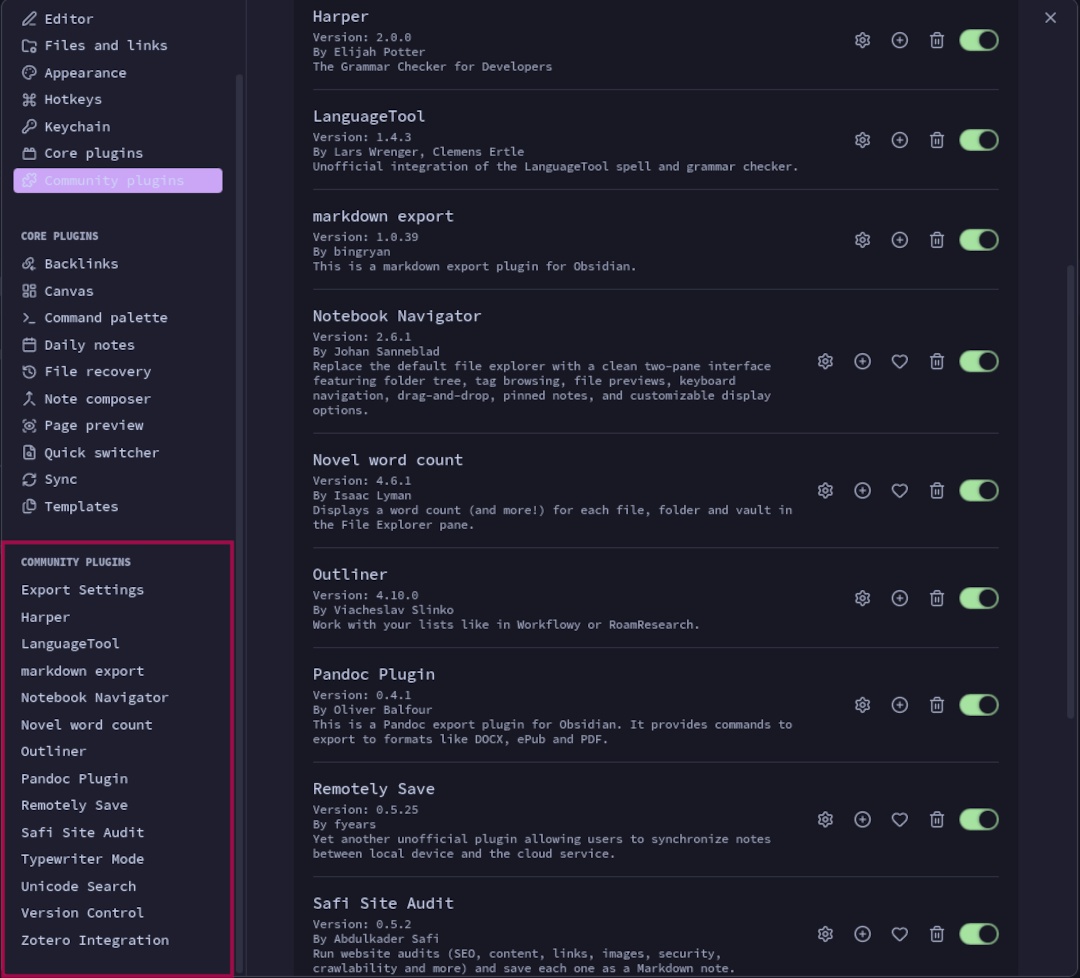
Before we dig into the exceptionally muddy waters of the ethical questions of using LLMs in writing it's necessary to be clear about this: I am the sole author of this article. Yes, I use some tools to assist in the writing of this article: (self-hosted) LanguageTool and Harper. Why? Because my grammar and spelling sucks.

But, rest assured, all the words on your screen were typed by me. All the awkward analogies, idioms, and other quirks of this text emerged from my mind, and not from an LLM. I will most certainly guarantee that this will lead vocabulary choices that are unusual, and may, therefore, not read in the same way that others might have written this.

And, I am the one making the choice to use properly formatted em-dashes and ellipses throughout this text. These have only been the convention for typeset prose since the invention of the movable type printing press by Johannes Gutenberg around the year 1440.

Donald Knuth spent years working on TeX, trying to find a way to automate properly typeset texts. Along the way he solved many problems that were far more complicated than anyone had thought they were. I don't understand why we don't honor the work of Knuth and use these machines to the fullest extent of their capabilities, especially when it comes to typesetting.

I do feel like these silly “tell-tales” were originally intended as a joke: “An em-dash? No one writes like that! Right?” and somewhere along the way the joke was lost.

Simple Tell-Tales Are a Lie

That's one of the first things I would like to contribute to the discussion. Simple, easy, tell-tales just aren't a reality. LLMs are not simple pieces of software that are just glorified “autocomplete” machines as some people would try to have us believe.

Even a cursory study of how an LLM is designed and trained will make this fact self-evident. While I am not an expert in this field (far from it), I have watched and read enough background information to have some appreciation for the complexity of the accomplishments in the field.

The facts are that there are many elements that go into an LLM:

  • The design of the neural network
  • The design of the model
  • The algorithms used in the model
  • The information used to train the model
  • The people who performed the training
  • The person(s) interacting with the model
  • The bugs / shortcoming of the agents

This is only a top-level view of some of the factors. It's pretty clear that the resulting output from an LLM can be vastly different based on changes to any or all of these factors. This also points to the fact that this should still be considered a research technology, and not something that is being implemented as a tool for the public to use, In my opinion.

Given this level of complexity, how can we think that there are simple tell-tales for LLM written works? It's simply ridiculous.

There Are Indicators of LLM Writing

There is a whole field of study around linguistics which can, using varying methods be used to identify patterns in written language. This is often used with historically significant documents to verify the authorship of said documents.

How is this done? By analyzing works known to be authored by a person, and comparing the documents in question to the known writings of the author. This process involves numerous factors:

  • Vocabulary of the author
  • Unique grammatical constructs employed by the author
  • The overall structure of a document
  • The presentation of arguments, explanations, etc.
  • Other narrative or exposition elements
  • The references or supporting evidence

This idea of examining the constructs and patterns found within a document isn't limited to written bodies of work. These concepts are applied to analyze things like music compositions.

Then why have tools like OpenAI's AI Classifier failed?

Because it's kind of like a dog chasing its own tail. A dog generally chases its own tail not because it wants to catch it, but because the activity itself is fun. The dog knows how to catch its tail, it does so all the time by laying down bending over to get to its tail.

An LLM trying to analyze a text to determine its provenance is like the dog chasing its tail. It can do the assigned activity, but the results are unlikely to end in success. Why? Quite simply, an LLM is likely unable to make a distinction between the information it has been trained on versus information it has generated. In terms of an LLM these two things are equal. The LLM written document is the result of the information it was trained on. What things can it do to find a distinction?

The Author's Social Contract

This is a topic that authors discuss at length. The question of the relationship between an author and their audience is frequently questioned.

Take, for example, a mystery author. Just how much information do they have to present to the reader throughout the text to make the solution satisfying? Is there an issue with presenting too many facts that lead to the solution? What amount of misdirection is appropriate in a story? Where is the line between misdirection and confusing the reader to the point frustration?

Similarly, Science Fiction authors faced the dilemma of writing “hard” Sci-fi, aka basing the technology strictly on known science and technology, versus using known science and technology as the basis for more advanced systems. In some cases, is there a basis for inventing whole new scientific concepts or principles in order to introduce a new technology to their world. Where is the line? What will the reader accept or reject?

These, and many more, types of questions exist throughout all genres of fiction writing. And, likely exist through many more forms of written communication. This discussion is something that is not going away anytime in the future. And now, there is a new topic to add to this: what is the line with LLMs?

Jola's reference to the Oxide Computing RFD 576 brings a lot of subtlety to the questions surrounding the use of LLMs in writing. It simultaneously seems to be advocating for some roles for LLMs, while still acknowledging that there are issues and dangers in using LLMs.

The issue I see with this is there is little to no objective measurement for the effective use of LLMs in their environment. I see this as a missed thought that needs to be carefully addressed. For example, it is suggested that LLMs can be used as research assistants (which is something that I've thought about myself). However, the document warns of the propensity for LLMs to make things up, insert claims that aren't true, or hallucinate, or fail in other ways. Therefore, the user of the LLM for research needs to verify all the claims in the output, and go through all the references to make certain they are valid.

When I considered this question, I started to wonder what the impact would be on my personal research process? In other words, I wondered if the time that I would save would be sufficiently greater than the amount of time I needed to validate the work of the LLM? While I have no experiential data on which make such a judgment, I do have an experience that informed my thoughts on this topic.

A few years ago I asked ChatGPT to write a profile of an artist I am deeply familiar with. I asked it to write a profile under 500 words in length to be used in the liner notes for a new release by said artist. The results were scary. The first part was not all that bad, it got the artists real name, his approximate age, and the region of the world he was from. It then went on to explain his style of music, and his range within that style of music.

Then things fell completely apart. It started listing the most popular releases from the artist. First, several of the releases were little known works by him. But if that wasn't bad enough, it listed a work that he has publicly and widely disavowed. And, to take things to the last level: it made up two works.

I spent over an hour researching the releases, especially because I couldn't any reference to any of these works in the artists online discographies. Once I had determined all the facts surrounding those works, I went back to the LLM and challenged it on the works it had listed. It took numerous exchanges to get it to recognize the fictional works, but it would never explain where those works had come from. As for the disavowed work, it did acknowledge that the artist had disavowed it, but wouldn't answer why that work had been included on the list.

Realize, this is only a 500 word profile. About 2 pages of typewritten text. Several hours spent in validating, and interrogating the LLM about its output. This was a task that would have taken me approximately 30 minutes to complete. At this point I saw that using an LLM for such tasks had an actual negative impact on my work process.

Now, a sample set of one does not make for a good basis to draw broader conclusions. However, when considering what is the line with LLMs, it should be considered whether the use of the tool is going to significantly contribute to the quality of the work, or if it is going to become an unduly burdensome tool. While some roles, such as a proofreading or critiquing one's writing might be a viable and useful option, other areas such as researching, writing assistance, or editing a work might be more burden than useful.

Does AI Fit?

There is something that I have been thinking about. We have been worried that LLM writing are changing the way that we communicate. However, isn't that something that we have been doing throughout history? Consider a few brief examples.

Pens

Yeah, this might seem like a boring way to start things, but there are things that we have to consider, seriously.

The first writing implements were reeds or feathers that were cut to a point, and slit in them. When dipped into an ink pot they held a small amount of ink to allow a person to write. This was an actual advancement over earlier forms of writing. And, because of the limited education, at the time, only Royalty (and possibly extremely wealthy people) had access to these tools. From the quill, we moved on the dip pen. Same concept as before, but now we had nibs made from steel.

The next major change would be to what we now call “dropper” pens, but were referred to at the time as reservoir pens. These were pens where the barrel portion was treated as a reservoir which could be filled with ink. The ink would flow into a part of the pen known as the feed. The feed was connected to the nib, and supplied ink to it. There is a lot of uncertainty about when this was first invented. There are claims that such a pen was invented in the mid-900s in Egypt, but there is no physical evidence of such a pen existing. It is also believed that Leonardo da Vinci may have made one for his own use. His journals contain designs for such a pen, and it's notable that his journals reflect a more continuous ink flow than other writings of the same period. However, there is definitely evidence that there were reservoir pens being produced and sold in 17th century Germany.

Innovation in the design and manufacture of pens remained steady through the 19th century. However, at the beginning of the 20th century a new era of fountain pens was born when self-filling pens began hitting the market. These pens used various mechanisms to allow the pens to be filled by sucking ink into the barrel of the pen. These pens quickly became runaway hits with the general population.

However, their years were numbered. There were efforts to come up with what is known now as the ballpoint pen dating all the way back to the late 1880s. However, all the early versions of such a pen had problems with ink flow, reliability, and material choices. These were much the same issues that had plagued the progress in fountain pen development. However, László Bíró and his brother György decided to undertake this problem in the 1930s, and by 1938 they filed for their first patent for the Biro pen. After World War II, the design of the pen was refined, and eventually came down in price to the point where it was easily accessible to the general public, and quickly supplanted the fountain pen.

The first patented typewriter was developed in 1829. Known as the Typographer by William Austin Burt. (There were several machines before this one, but this is the first extensively documented machine.) In the mid-19th century the desire and need for speeding up communications brought the development of the typewriter to the forefront of technology. Typists, stenographers, and telegraphers could take down information at the rate of approximately 130 words per minute, whereas people writing with a pen tended to top out around 30 words per minute.

The first commercially successful typewriter was patented in 1868, and was sold under the name “Shoales and Glidden Typewriter”. In 1873 Remington would bring its first typewriter to market. In the early 1900s the design of typewriters reached a point where the design was somewhat standardized, and there were at least a dozen notable manufacturers of typewriters.

The first electric typewriter began production in 1900. However, the first practical electric typewriter wasn't produced until 1914, and successfully brought to market in 1920. From the 1920s to the 1940s the main company producing electric typewriters (Northeast Electric Company) changed hands several times, saw its typewriter division spun-off into a separate company, and was eventually acquired by IBM.

IBM would take the technology, and being producing its Electromatic series of typewriters, which introduced the ability to vary the spacing of the characters, producing a typewritten page the appeared more like a typeset document. In 1961 IBM would introduce the Selectric typewriter, which used a typeball, which could be changed, enabling different fonts or type styles to be achieved.

The final step in the development of the typewriter was the electronic (not to be confused with electric typewriters). Electronic typewriter distinctions were the use of the daisy wheel type head, and using circuitry to control the type head, instead of the purely mechanical mechanisms of the previous electric typewriter.

The typewriter market began to recede in the 1990s after the invention of the personal computer. Of course, much of the invention around the typewriter continues on today in the computer keyboards used by many people.

Getting to the Point

Why discuss the invention and progression of pens and typewriters? They are highly relevant to this discussion, as other communication inventions throughout the ages. These were just the two most direct examples that came to my mind.

What is worth considering is how did these technologies impact the work of creating written documents? The progress from using a quill / reed and ink or dip pens to the self filling fountain pens enabled writers to expand on their work. It made it easier for them to write in a continuous flow of thoughts. Writers like James Joyce and Ernest Hemingway were known to use fountain pens in composing their works. How much would they have been impacted if they only had a dip pen to work with? The invention of the ballpoint pen took writing to another level altogether, being more portable than fountain pens, and requiring fewer and less messy refills.

The typewriter removed many of the restrictions of the pen in terms of the speed at which a work could be produced, and the accuracy and legibility of the document produced by an author. The penmanship of the author was less of an issue. The speed at which a document could be typed was up to four times the speed of handwriting, and potentially higher with the invention of the electric and electronic typewriters. And, by the time electric and electronic typewriters emerged, the ability to correct the text as it was written was greatly improved.

We can move along and look at what the personal computer and the internet have enabled for authors… That is such a large topic I didn't even want to start writing about it.

Is AI Next?

Is AI the next fountain pen or typewriter? Is this a technology that will have impact on writing? That seems to be a foregone conclusion at this point as we look at the works that are being produced now.

The question then becomes where will AI fit in? AI is current still in its early stages, not the mature technology that the marketers and AI companies would like us to believe that it is. But, is there a point where it crosses the point of maturity and become a tool that is going to be seen in the same way as earlier tools were?

There were authors that resisted using typewriters. There were authors that resisted using specific brands of pens (there is a humorous story in which H. P. Lovecraft complained bitterly when he was forced to use a Conklin fountain pen after losing his Waterman pen. Meanwhile, Mark Twain was so in love with the Conklin pens that he endorsed them.)

What It Looks Like

The final question I have been asking myself win regard to AI and writing is: what does it look like? That is, if, and when the technology reaches a point where it is considered to be mature enough to become just another tool for writers and artists?

This is another question that I don't have an answer for, and I don't have any predictions on it. I only have some hopes for what will come. What hopes do I have?

My hope is that the technology will not remain under the direction of large corporations. I would rather see the technology becoming something that individuals chose implement for themselves, and have the ability to customize what it does for them, and how they interact with it.

This basically means local LLM implementations. We have machines that are capable of running small local LLM's right now. (I'm typing this on an AMD Ryzen AI MAX+ system right now). I think there are ways to allow individuals to implement and customize this tool in the same manner that many of us chose to install and customize our Linux systems. I think this could also open the door(s) to ways of correcting the wrongs of the current AI industry in terms of their use of other people's property. But that's a whole other thought process that I have been going through, which belongs in a different article.

Conclusion

The future of AI as it stands is uncertain. There are people that are both bullish and bearish on the state of the industry from a business standpoint. I tend to align myself more with the bears. I believe that the financing is a shame, and there will (hopefully) be either some kind of market correction, or day of reckoning where these companies are concerned.

While the things that many people think are tells really aren't, that doesn't mean it isn't possible to identify AI generated writing more accurately given the correct set of linguistic analysis tools. And at this point we should be identifying these works as the technology is really not at a level where it should be so broadly accepted.

When I look at a company like Oxide Computers I am encouraged that they are taking an approach that addresses many of the subtleties of the questions surrounding AI. However, what I am not encouraged by is that the missed the singularly most critical point: how does one quantify the usefulness of this technology? My personal experience showed me that it could quite easily and substantially get in my way, turning a thirty-minute task into two hours of work. That's not a productivity boon.

But, I am also wondering if we are looking at this form the wrong perspective. Throughout history there have been technologies that have substantially impacted our ability to write and create. Has the impact of those technologies been positive or negative? That's a question with an unknown answer, and one that should be researched more deeply in order to understand what we should expect as the impact of AI.

I know there have been artists and creators that have resisted the technologies that I brought up in this article. I mentioned that one author couldn't stand a self-filling fountain pen (Lovecraft), while another (Twain) loved it so much he endorsed the company. There were authors that resisted using the typewriter when it became a reasonably commonplace and affordable tool for writing, despite all of its benefits.

Where does AI fit in for writers? I don't know, but I do have some hopes for it. The primary hope is that it is a technology that does not remain in the hands of large corporations. I hope that it instead becomes a personal technology that the individual can implement for themselves, and customize it to integrate it into their life.

FediRing
◀️ Prev Home Next ▶️

Sometimes I cannot, for the life of me, understand what spammers are thinking. For that matter, I am not even certain they have more than a single brain cell left. Take this one for example, sending eight messages in a single minute:

Eight spam messages in a single minute Eight spam messages in a single minute

Now, look, I get it. They are really trying to get attention. But really, do they think this message will actually accomplish anything?

The contents of the spam message

I mean seriously, all of these messages just hit my spam filter and got dumped into a folder for me to double-check.

But, if it was just these eight messages I might have forgiven it as a one-off, drive-by spamming. But no, that was just the spam from tonight. They've been at this for two weeks now. Every few days they drop by the site that has that contact form, spam eight messages at me, and move on.

I mean, it would be funny if it weren't so pathetic: there are fifty-six messages from this spammer in my folder. And they've been doing this exact same thing every time: spam eight messages and then move on.

But, they are trying to be a bit strategic… They don't do it every day. It seems they are on some kind of rotation: doing their spamming once every two-three days. Like that is going to make any kind of difference???

Do they really think this going to work? Does it ever work on anyone? I mean, I just have to wonder: where are their brain cells hiding?

There are a total of one hundred and sixty-six messages in my spam folder. They make up fifty-six of them, that is over one third of the spam messages in that folder. Guess it makes the cleanup all that much easier.

<delete>

FediRing
◀️ Prev Home Next ▶️

Responding To My Former Web Host TOC:

In part two I stated that I thought that would be the end of this series of posts, and yet here I am with part three. This one will be the absolute final post as I don't have anything more to say to my web host. However, the response I received just now really should be documented. I said in part two that I respected the people I worked with at this hosting company, and that continues to be the case.

So, with that, here is the last exchange.

My Response To The Support Person

Thank you for the response. You have largely understood the issues that I brought up, and had some insightful feedback.

I would like to clarify something, as I think I didn't provide a proper context for you.

At no point did I feel that the infrastructure was in my way. That is quite far from the case. I am actually a former IT Server / Infrastructure engineer. My understanding of your underlying design is why I decided to go with your service in the first place. I was tired of working with hosting services that really didn't understand how to implement a solid infrastructure. Even though there were aspects of the environment I didn't use, it was good to know they were available if I needed them. (And, if I had migrated one of my other sites, I am quite certain I would have needed them.)

My “using a sledgehammer when all I really need is a screwdriver” is typical of me. I've always tended to look at requirements / specs, and design solutions that are overkill.

The “optimization issue” was really only frustrating the first time it happened. Since I didn't have the familiarity with the codebase to know where to look for the issue I was left in a situation where I couldn't find the answer on my own. Once support had tracked down the issue, it was mostly just an infrequent annoyance, which is why I didn't make any noise about it. (If it had been a serious enough issue, I would have pushed the issue to your dev group.)

The only thing that really didn't fit for me is WordPress. I can tell you understand that level of frustration I am feeling with that. ;)

As to the pricing, while it wasn't a major issue for me, I did find it annoying. I would think that Enterprise customers would likely find it frustrating too. I know most of the places I worked preferred to be able to have fixed rate contracts for a given term, and then be able to re-negotiate when that term was up. This kind of pricing structure would likely have never flown in any of the environments I worked in. (OTOH — all the companies I worked for had their own infrastructure, and WordPress wasn't considered an Enterprise class platform.)

Response From My Former Web Host

Thank you for the clarification and for sharing more about your background.

That context definitely helps me better understand where you were coming from.

It’s great to hear that the infrastructure itself was actually one of the reasons you chose our service. I completely understand the “sledgehammer vs screwdriver” approach as well, especially from an engineering perspective where building for flexibility and scalability becomes second nature.

I also appreciate you clarifying the optimization issue. That makes perfect sense, especially when the main frustration was initially not knowing where to look within an unfamiliar codebase rather than the issue itself being critical.

And yes, I completely understand your feelings about WordPress. It can definitely become the limiting factor, particularly for users coming from more traditional infrastructure and engineering environments.

Your feedback regarding the pricing structure is also very valid. Predictability is important, especially in enterprise environments where fixed-term budgeting is often preferred.

Thank you again for the thoughtful feedback and for taking the time to explain your experience in more detail. We genuinely appreciate it.

Wishing you all the best,

What I Didn't Provide Detail About

When I said above:

And, if I had migrated one of my other sites, I am quite certain I would have needed them.

I was referring to the dev/test environment feature they offer. The site I haven't migrated relies heavily on a WordPress plugin that is no longer available. The company that produced it completely pulled it from the market, doesn't offer any support for it, and didn't bother to make the code available for it.

This left me with 250-350 posts that rely on a plugin that is no longer available or supported, with no clear migration path.

I've since dumped the contents of that site. All the information from that plugin is stored in metadata in each post. When I dumped it (into a Jekyll compatible flat-file format), all the metadata came along with the posts. Now I just need to extract that data from the JSON section of each file, and translate into an appropriate format for presentation here.

Along with this, I need to test all the URI's in the posts. Given the age of the posts, I know there are quite a few that are no longer available… This is going to be true for all ~500 posts on that site.

This is a task that is going to be annoying. I am going to have to find some way to automate it. Manual intervention isn't an option.

Conclusion

To summarize everything:

  • My former web hosts infrastructure was overkill for my needs. But, given my IT Infrastructure background I deliberately chose it.
  • I did foresee needing part of that infrastructure for migrating one site, which I never worked on.
  • I only had two actual issues with the hosting service:
    • First was an incident with a plugin that caused issues, but that was more of an annoyance once the source of the problem was found.
    • Second was the instability of their pricing. In my experience that wouldn't fly in an enterprise environment. (Then again, WordPress was never accepted in any enterprise environment I worked in.)
  • Finally, the real issue I had wasn't with them, but with WordPress. From their implementation of Gutenberg to the addition of AI support in 7.0 Automattic seems to be on the path to complete enshittification of the platform. I consider that process to be complete now.
FediRing
◀️ Prev Home Next ▶️

Responding To My Former Web Host TOC:

I stated the other day that I was surprised my former web host emailed me asking for feedback after I'd closed out my account. No survey, or feedback form, just a straightforward email.

And now I am surprised again. Why? Yesterday morning I received a response to that email. Only nine or ten hours after I sent it. And, much to my pleasure, the representative largely understood what I was talking about. She had some interesting and relevant comments.

So, here I am, presenting part two of this email exchange. I plan to respond to her email to clear up a minor mis-perception I think she has, but otherwise I feel like she's really taking my feedback and handling it properly.

(And this is something I have to say… I have respect for all the people I worked with at this host. They were very professional, responsive, and good at resolving issues. This email is further indication of the customer service this hosting service provided.)


First of all, thank you for taking the time to share such thoughtful and detailed feedback. We genuinely appreciate the level of insight you provided, and I can tell this wasn’t a decision you made lightly.

I’m glad to hear that, overall, you found value in the infrastructure and services we built. At the same time, I completely understand the frustrations you experienced, especially with the recurring optimization issue and the feeling of having to repeatedly reapply fixes after updates. I can absolutely see how that would become frustrating over time, particularly when your setup was intentionally kept simple and close to the default WordPress experience.

Your comments regarding testing against default WordPress themes and preserving user-defined optimization settings are especially valuable, and I’ll be sure to pass that feedback along to the relevant team. Even though the underlying issue may have been more nuanced, the impact on your workflow was very real, and that matters.

I also appreciate your honesty about pricing and feature fit. It makes complete sense that a platform designed for agencies, developers, and more complex website management can feel excessive when your primary focus is writing rather than maintaining large-scale web infrastructure. Sometimes the best solution is the one that stays out of the way and lets you focus on the work you actually care about.

And regarding WordPress itself, while experiences and preferences naturally vary, I can certainly understand your perspective on how the platform has evolved over the years. For users whose priority is writing efficiency and simplicity, the shift toward block-based editing and increasingly visual workflows hasn’t always been a welcome change. It’s clear you’ve given a lot of thought to your workflow and the tools that best support it, and it sounds like you’ve found an approach that aligns much more closely with how you prefer to work.

It’s great to hear that you were able to migrate your sites successfully and settle into a solution that better fits both your workflow and your budget.

Thank you again for having been with us and for giving our platform a chance over the years. We truly appreciate your support, your candid feedback, and the professionalism with which you shared your experience.

Wishing you all the best with your writing and your new setup moving forward.


Categories: #Article, #Feature Tags: #Webhosting, #Customer-Service, #email, #rants

FediRing
◀️ Prev Home Next ▶️

Responding To My Former Web Host TOC:

I got an email yesterday that was somewhat unexpected. My former hosting service asked me to send an email about why I had closed out my account. This is something I haven't experienced before… A company that wants an actual email, they don't just want some form or survey filled out. They want to actually hear everything that I have to say… Well, I decided that I would take them up on it.

And now, I am presenting this email to document all the gory details. But, let's be clear: I spend a lot of it talking about their service, and one issue that I had. Most of that was a minor annoyance, not something that pushed me to make the decision to switch. As I document in the second half of this message, the primary reason is the enshittification of WordPress.

Hopefully you enjoy the parts of this where I get completely unhinged when talking about certain topics. ;)


You know the saying: “It's not you, it's me?” Typically, it's a lie, right? Well, in this case it's about 90% percent true.

There's very little that I had a problem with from the standpoint of your infrastructure. I think you've done an excellent job of designing a system that is well integrated, and provides the services that are needed to manage a professional environment.

However, where I did run into some friction centered around one of the plugins that you provide. I don't recall which one it was, but almost every time it was updated it kept breaking the image rendering on my site's home page. One of your support people found the issue: it was the JS optimization one of your plugins that was breaking things. The annoyance was every time the plugin would update, I would have to go back into my site and fix the issue. It was only recently I found the feature that allowed me to snapshot the settings so I could apply them quickly without having to look up the support issue to remember how to fix the problem.

The real reason this was quite annoying: I was always using the current default WordPress template. I didn't need anything too fancy that the default theme didn't offer. Personally, I really think that your Q&A process should be testing against several configurations of the default template to make certain that it isn't breaking things. (Although, in this case, that might not have worked… IIRC the problem was the plugin overwriting the settings the user had implemented, instead of preserving them.)

The pricing was more than I really want to invest. When I looked at things, your service was running me over $800/yr. When I add the additional services I required, that expense jumped to somewhere between $1000-1200/yr. There's no way I can justify spending $300-400 per website, that's excessive for me. This wasn't helped by the changes in your pricing structure over the years.

My replacement solution has my expenses down to $200-250/yr to run five websites. It's not the same as having a full infrastructure setup such as yours, however, it will meet my needs better (which I'll explain more about later.)

The other thing about your environment was: it's like using a sledgehammer when all I really require is a screwdriver. I'm not in the business of website design. I'm in the “business” of writing.

This means that features like having a staging environment are, mostly, non-features for me. If anything I just require a test environment for making changes to the layout of my sites… I don't need a full mirror of my site, there's nothing so complicated that I have to be concerned about major side effects. (Honestly, the whole staging environment was one of the most attractive features that sold me on your service initially. It was surprising to me that I never used it because it wasn't necessary.) There are several other features of your environment that were like that.

But the single biggest issue has nothing to do with you. It is the fact that Automattic has done everything they possibly could to turn WordPress into a steaming pile of horse manure over the last eight or so years. And now, with the addition of AI integration, the enshittification process is complete. WordPress is no longer a tool for writers. It's a tool for visual web development, and the spreading of as much slop as possible.

I tried to give WordPress a chance with the Gutenberg editor. But block editors are just not for writing, they are for page design / layout. Look at the tools that writers use: Google Docs, Microsoft Word, LibreOffice Write. Hell, George R. R. Martin is still using a copy of WordStar from the 1980s, and there are other authors that are still using WordPerfect from the 1990s.

The thing is, the editor is getting in the way of the writing process. It puts things in the path of the writing process that just shouldn't be there. I shouldn't have to think about inserting a heading, I should just be able to hit a quick shortcut and have it done. And, if I want to select text across two paragraphs to join / edit a couple of sentences, it shouldn't be a five-step process (try selecting the last word in one paragraph and keep selecting into the next paragraph see what happens… One of the most annoying things to have been forced on writers in the last decade.)

But it's not limited to the editor itself. It's the whole block based website layout. It just gets in the way, and it makes things a lot less efficient and quite a bit more annoying. I just went and looked at one of my other websites that is still using a pre-Gutenberg and pre-Block layout configuration, and I couldn't believe my eyes: this site that I hadn't looked at for over a year was a lot more responsive than anything I've worked on with any current theme. And this is still a current installation of WordPress: the host that site is on is performing similar services to yours: providing automatic updates to the current versions of WordPress and any plugins, full backups, etc. While there are still a lot of differences (from the plugin stack that it's running, to the network infrastructure itself), the fact is that the older theme was just a lot easier to render.

And then, over time, the whole block and patterns system in WordPress has just made things even worse. I tried recently to reconfigure my home page to make it into a minimalist layout: simple image, title, and date for each post, with the title being the link to the article. Would you believe that I spent two days trying to get the layout that I wanted, and failed? Why? I don't know, I'm still baffled. I just moved things around in the homepage template to make a simple list. Furthermore, I found there were things that should have been extremely simple that I couldn't get it to do, like make smaller, thumbnail sized versions of the featured images. And for some reason the date for all the articles on the homepage were the current date — despite me not moving the date element outside the query loop.

So now, things I had been able to do in previous versions of WordPress were breaking in the latest version. And then I found this fucking bullshit:

WordPress AI Connectors screen. WordPress AI Connectors screen.

And I lost it. I had been considering moving off WordPress for years, and now (as I previously stated) seeing that the enshittification was complete, I decided that I needed to dump WordPress. (And don't even get me started on emDash.)

I had been thinking for a long time about moving my sites to a static website generator. However, I wasn't completely happy with what it would take to integrate one into my tool chain / working environment. However, a little over a week ago I tested out a couple of really simple platforms that offer a middle ground between a static generator and an online environment. After a little testing and evaluation, I ran the numbers and determined that it would be very effective at reducing my expenses. And, because it integrates into my working environment, I can ensure backups are handled properly (I have a triple-backup system, that includes offsite physical backups).

So, I migrated all three sites that were hosted with you over a period of three-four days, and shut down everything last weekend.

No looking back now. Thanks for the service you provided.

George

FediRing
◀️ Prev Home Next ▶️

Frank Sinatra circa 1958 Frank Sinatra circa 1958

The other day I found a clip of a VTuber talking about expanding beyond their typical music taste. In this case they had heard a small snippet of a song by Frank Sinatra somewhere, and decided to check it out. The song? It's Nice To Go Trav'ling from the Come Fly With Album. The clip took a turn that I found a bit surprising.

The VTuber stated that they really liked the song… It was basically a silly piece of music, one they even had a thought of covering. Until they heard one verse, a verse that changed everything. Why? Well, as they stated, Frank said a slur word. And he didn't just say it once, he said it three times!

Frank Sinatra uttering a slur? In a song? A song on a record from a major recording label? A recording from 1958? I couldn't believe what I was hearing, and I had to understand what has going on. So I looked up the song lyrics, and what I encountered was quite a bit more complicated than I would have initially thought.

The lyric in question is:

It's quite the life to play gypsy And roam as gypsies will roam It's quite the life to play gypsy But your heart starts singin' when your homeward wingin' 'cross the foam

This wasn't my first time encountering the interpretation of this term for the Romani people as a slur. But, as with many situations there is more to this than one might expect, or at least I expected from the context.

On The Surface

If you search the web for the phrase “is [redacted] word a slur”, you will likely find articles like Why It’s Time to Stop Saying “Gypsy”, which claim:

To answer your question about this frequently Googled term, the short answer is yes, absolutely. The word is as a racial slur against the Roma people, the PC term for gypsy.

Reading this article, I was immediately put on alert. Anytime someone decides to take an absolute position, it seems more likely they will have reached a conclusion that is, at best, dismissive of part of the information that is available.

The Etymology

This was where I took a look at the word from an etymological standpoint. Why? Because our language has history. Contextual use of language based in history is frequently ignored when people take a stand, especially an absolute stand.

Enter Grammarphobia with the article: Is ‘Gypsy’ a slur?. This article very clearly documents that the origins of the word were used in a pejorative manner:

The earliest form of the word in English, which the Oxford English Dictionary dates to the 1530s, was “Gipcyan,” an abbreviated version of “Egyptian.” […] And many early appearances of “Gypsy” in English were highly pejorative because, as OED citations show, these itinerant foreigners were often viewed with contempt and mistrust, suspected of crimes, and driven away.

But, then there are some turns and twists in the story:

In later use, Oxford adds, “gypsy” (by this time lowercased) was used playfully rather than contemptuously for a woman, “and applied esp. to a brunette.” All those uses have died out.

But since then “gypsy” (also spelled “gipsy”) has acquired several more meanings, none of them pejorative. Most date from around the mid-20th century, [...]

And it's these meanings that many of us are more familiar, and are likely the origin of the verse in the Frank Sinatra song:

1) Someone who’s free-spirited or doesn’t live in one place for long.

2) A person with a career or way of life that’s itinerant or unconventional, especially a part-time or temporary college faculty member or a performer in the chorus line of a theatrical production.

So, there it is, the likely reason the song contains (the Sammy Cahn penned) lyric that is interpreted as containing slurs. These definitions are the likely reason Frank Sinatra sang them: they were understood as meaning carefree and free-spirited.

I think it's safe to say the conclusion that Grammarphobia states, was likely the prevailing thought in the 1950s-1960s:

Our conclusions are that that “Gypsy” (with a capital “G”) is offensive to some people, and should be used with caution if at all. It should be avoided entirely if any ethnic connection is implied; instead, the words “Roma” or “Romani” should be used. Meanwhile, the non-ethnic uses of “gypsy” (with a lowercase “g”) should not be condemned.

Final Twist

So, if I were to take Grammarphobia's conclusion that should be the end of the discussion, right? Not exactly, there was still another piece of context to consider. And, it's the context that the VTuber was most likely having the strongest reaction to when they condemned Frank for using a slur.

The VTuber in question is British, and their understanding of the Romani people is likely very different from the majority of people in North America. We have long prided ourselves on being open and welcoming to immigrants and itinerant peoples (despite what our current government would have you believe).

This is not to say that we are in any way perfect. There are plenty of examples of distressing things that have happened to immigrants in this country (no example is louder than the imprisonment of Japanese Americans during World War II). There is no debate on this topic. However, on the whole, we have a better track record compared to many countries.

The Romani in Europe, however, have had to endure what appears to have been a ceaseless stream of racism, and distrust. One of the worst cases was the Romani Holocaust (aka Porajmos) by Germany in World War II. But, there are systemic biases and racism that remain throughout Europe to this day.

While there are efforts underway to try to establish the Romani in Europe, there is a very long path ahead for tensions to be reduced. I would likely say that it is going to take several more generations.

Which is where this VTuber comes back in to the picture. They are part of a generation that is being more sensitive to these issues. And for that they are to be applauded. Seeing that this particular song would likely be seen as being incredibly insensitive to the Romani, they are right to take a pass on it.

Although, maybe there's a way to change the verse to remove the stigma? Perhaps this would work?

It's quite the life to play carefree And roam as nomads will roam It's quite the life to be at ease But your heart starts singin' when your homeward wingin' 'cross the foam


Category: #Essay Tags: #music, #vtuber, #history, #romani, #sinatra,

FediRing
◀️ Prev Home Next ▶️

Up-close image of a person holding a fountain pen. Up-close image of a person holding a fountain pen.

Intro: The End of NaNoWriMo

So, I had heard that NaNoWriMo (National Novel Writing Month) competition had come to an end. But, I hadn't known the full extent of the situation until I found a write-up about it via the NaNoWriMo2 website. And, I had only found out about this when I was browsing the Writing section of Feddit.Online (a Fediverse alternative to Reddit), and someone asked if anyone was going to participate in the Novel Writing competition as outlined on the NaNoWriMo2 website.

So, after looking at that site, I made a very quick decision: to start a community on Feddit for the NaNoWriMo2 competition. Nothing specifically tied to whoever had started that website, but just putting together a space where Fediverse citizens could talk about the competition throughout the month of November.

The Birth of FediWriMo

I put the community together on Friday night, October 31st, and waited to see if anyone joined the community. And, sure enough, a few people did join. We're currently standing at 17 subscribers, with 9-10 active on a daily basis.

I'd call that a success for a community started at the very last minute, and with nothing more than word-of-mouth spreading its existence through the Fediverse.

But, I started having some immediate reservations. Not about the community, but about the name and the association(s) with NaNoWriMo and NaNoWriMo2. There were two, in particular:

  • The name was too close to the old, controversial organization, while we had literally no association with the previous organization.
  • I don't know the people involved with NaNoWriMo2 website.

So, I thought maybe we should rename the community, and asked for suggestions. There were a couple of thoughts, but not too much input... So I made the decision to rename the community FediWriMo. The idea being that we kept the core idea of being a “Writing Month” community, but this one is explicitly based in the Fediverse.

I also think this is a good idea, as we are not linking in the concept that this is a “National” competition. We're not restricting this to one country, but to anyone that is part of the Fediverse.

What's Next?

Honestly, I just want to get through this month first. We're a small enough group that I am the sole Administrator and Moderator for the community.

There are some things that I think I can manage that would be beneficial to the group.

I would like to grow the community as much as possible within the Fediverse. That's something that I think we can do.

I'd like to bring on some moderators: if we grow the group to a reasonable size, then adding more moderators makes sense.

Also, I think there could be more documentation and resources for the community. This is something I think I can do.

There's a lot more that I'd love to FediWriMo become. But, I won't get into those ideas unless there are a lot more people that want to be involved.

Conclusion

So, that's the story of how I started FediWriMo. If you'd like to join us, please do by joining the Feddit FediWriMo Community. Of course, you can follow the community from Mastodon or your favorite platform.

And, if you like what we are doing, consider joining the FediWriMo Leaderboard. See the community for more details about TrackBear.


Categories: #Arts, #Literature Tags: #community, #fediverse, #FediWriMo, #NaNoWriMo, #TrackBear, #WordCount, #WritingMonth

FediRing
◀️ Prev Home Next ▶️

Originally Published: 2025-03-11 Closeup of a man wearing a wristwatch

Introduction

It really wasn't all that long ago that keeping track of the time was not as passive as it is today. Back in the 1980s, a mere 40 years ago, cell phones weren't prevalent. Even desktop and laptop computers were still prone to needing to have their time checked.

This was especially true when the Daylight Savings Time changes happened twice a year. And this is the story of how I, despite having recently undertaken a time-based hobby, nearly missed this event.

The Importance of Daylight Savings Time

Given how technology has made the shift between Standard Time and Daylight Saving Time so automatic and seamless to most of our lives, we have lost the significance of this event. However, it really is still a very specific event that has some fairly major implications.

The easily understood part of Daylight Saving Time (DST) is that it is based on the fact that the earth rotates on a tilted axis, and as we orbit the sun the length of daylight shifts throughout the year. Therefore, we adjust our clocks when there are fewer daylight hours during a day in order to take advantage of that daylight.

But there is quite a bit more to the changing of the clocks than meets the eye. The Romans used a system of changing hour lengths with their water clocks to account for the changing of daylight periods throughout the year. The National Assembly in Spain moved meetings an hour forward from May-September in order to account for the changes in daylight.

However, it wasn't until 1895 when entomologist George Hudson submitted a paper proposing the changing of the clocks to the Wellington Philosophical Society of New Zealand that anyone considered the idea. Hudson had come up with the idea in order to have more post-work daylight available to him for collecting insects. In 1907 William Willet independently proposed the same idea, and would publish a paper with the concept a few years later.

Port Arthur, Ontario, Canada was the first city to actually implement DST in 1908, followed by Orillia, Ontario in 1911. The German Empire and Austria-Hungary were the first states to implement the time change in 1916.

The importance of time keeping, however, had not fully been realized yet. It would become a major thing that was necessary, however, with the invention of the railroad, and the need to time trains accurately. Standard Time / Daylight Saving time also played a part in World War I.

There's a lot more detail regarding the history of Daylight Saving Time, which a brief read on Wikipedia can fill in.

My Time Story

Throughout the years, I have been embracing my role as a “technology curmudgeon”. That is to say, that I don't have an appreciation of the advancement of technology for the sake of the advancement of technology. However, that doesn't mean that I am totally against the advancement of technology, just that I want to see a proof of the value of the advancement before integrating it into my life.

For example, the furor over NFT's a few years ago. There was no way in which I saw them as having any value, or fitting into or improving most lives in any substantive ways. The same goes for Crypto Currency. At one time I was actually more interested in Crypto, as I saw some projects that had potential to add value. In particular Namecoin, which initially proposed to be a censorship-proof method of handling the Domain Name System, which is extremely important to the internet as we know. However, this project has failed to gain recognition by ICANN the controlling entity for domain names, and therefore has only been able to handle .bit domains outside the ICANN registry.

Even cell phones were initially a hard sell for me. I didn't see the use for them initially. That was until there was real development in the Smartphone market, and it started replacing numerous forms of communication, including text messaging, beepers and regular telephones. By the time the iPhone was announced it was clear that cellphone technology was here to stay, and I adopted it.

However, that doesn't mean that I have adopted everything related to cellphones that have happened over the years. Google Glass? Nah, I didn't see where people really wanted or needed Augmented Reality. Then there were the fitness trackers / watches that begat the Apple Watch.

This was a whole area that I didn't go for. Why? The issues surrounding technology, applications, and the amount of information that you are giving up when using them has become a convoluted mess. And something that I generally don't want to deal with.

But, after doing some investigation into smartwatches, I did decide that I wanted to wear a watch again — which I hadn't done for years and years.

How I Realized I Had Forgotten About DST

So, over the past eight or nine months, I've amassed a bit of a wristwatch collection. Unlike most people that get into watches, however, I haven't been interested in the mechanical variety of watches. Instead, I have a preference for several forms of quartz watches.

Now, I briefly talked about quartz watches in my article on the Pebble watch. (The Resurrection of the Pebble) Some of the things that I have pointed out about the advancement of quartz technology include solar charged watches, and radio-controlled watches.

And, I have a few examples of both solar and radio-controlled watches in my collection. In fact, the Casio Lineage watches in my collection are both solar and radio-controlled. They have become some of my more frequently worn watches. They are truly “grab-n-go” watches.

However, I bought them after the last time change, so I set them up and haven't had a time when they should have adjusted automatically... That is until this last Sunday, when without even realizing that the time change occurred, I picked up one of them out of my collection and put it on.

The fun of the whole situation was that I didn't realize there was anything significant. The time on the watch matched my cellphone, my computer, and my eReader...all of which I use before getting my breakfast in the morning (I load a bunch of fresh periodicals on my eReader to take to breakfast with me every morning).

Now, the unusual thing in my house this: there is a digital clock that my parents bought in the early 2000s that isn't connected to the internet, or even the home Wi-Fi in any way. The clock is rather a nuisance, really, but I leave it sitting near the TV in my living room out of the familiarity of it being there for so many years.

So, I was sitting in my living room this last Sunday, reading The Economist on my eReader, when I glanced at the clock and realized that it had the same time as my eReader. But, it shouldn't have — during the winter there was always a one-hour difference between that clock and any of my other devices.

Confused, I looked at my watch, and found that it had the same time as my eReader and the clock sitting next to the television. It was then that two things dawned on me: (1) the time had changed, and (2) the Lineage watch I had picked up had, indeed, used the military radio signal to reset itself when the time had officially changed...without any intervention from me.

Now I just had to deal with the 40+ non-radio controlled watches in my collection.


Categories: #Features #Wildcard Tags: #radiocontrolled #solar #technology #wristwatch

FediRing
◀️ Prev Home Next ▶️

Originally Published: 2025-02-24 Image of an eReader. Image of an eReader.

Introduction

Unfortunately, as you read this you will have a very narrow window to take any action(s) that you might want to in light of Amazon removing the ability for Kindle users to download their legally purchased eBooks. The feature is going away on February 26th, 2025, while this article will be published on the 24th.

Here's a Hackaday article on how to download a copy of your eBooks in case you want to: Auto-Download Your Kindle Books Before February 26th Deadline

This move by Amazon is quite possibly one of the more alarming things they have done over the past fifteen years of the Amazon Kindle being available. But's it's not the only alarming thing that has happened. Let's talk about this in more detail.

The Kindle's Sketchy History

The Kindle has long been seen as the defacto eReader for many people. And that is due to the way in which it was well integrated into the Amazon ecosystem. If you wanted to read and buy books, you could do it all right on the device.

And, let's not downplay the overall functionality and usability of the device. It has a long battery life, is lightweight, and has an excellent screen. Not to mention, due to the aforementioned ecosystem, Amazon was able to undercut most of the eReader market in terms of pricing.

Heck, all of this is why I started using one back in 2019. It was just too convenient, especially once the pandemic hit. But, the Kindle has not been without its share of controversies over the past 20 or so years.

For example, back in 2022 author's protested Amazon's return policy for e-books that lead to some of them actually seeing negative balances on their accounts. (Authors are protesting Amazon's e-book policy that allows users to read and return)

And then there are indie authors who have felt that Amazon has been manipulating the e-book market, or that changes to the platform are affecting them. (Amazon’s war on indie authors?)

And then there is the all-time classic: In 2009 Amazon deleted copies of 1984 and Animal Farm from the Kindle, without any warning to customers. (Amazon Secretly Removes “1984” From the Kindle) And the worst part? It took Amazon over a month to offer to replace or refund the purchases (Amazon Apologizes for Destroying ‘1984’ Copies, Offers New ‘1984’ Copies (or $30)).

And, let's not forget in 2023 Amazon automatically pushed censored copies of Roald Dahl's books to all Kindle users. (Roald Dahl e-books being updated automatically with censored versions)

But all of this is nothing new. Look around Reddit and other forums, and you will eventually find an author of a reader that has complaints about Amazon and the Kindle specifically. So why would Amazon suddenly be making this kind of change? I might have come across some insight into this as I was doing a bit of digging.

Hint: It's Likely Not About Piracy

One of the articles that I saw (The Kindle Swindle) seems to have reasoned that the main reason for this change has to do with piracy. And, to make their point, they point to the UK Government's Online Copyright Infringement Tracker, which estimates eBooks are pirated at a rate of about %24.

However, that %24 is actually listed as being in the “Average Infringement Level”. Digital Magazines, Sports and Software all have much higher infringement levels, and some of those items are actually within Amazon's business model. So it would make more sense for Amazon to go after those areas instead of eBooks. Also, Music, Audiobooks, and Film are also in that middle category, and those are at least equally important to Amazon's business model.

No, I think this change in policy is actually Amazon's effort to get in front of a potentially on-coming train. That train is a pair of lawsuits that will be hitting them next year.

The first is an FTC Antitrust lawsuit on behalf of users of the Amazon Marketplace. This lawsuit could (potentially) cost the company a lot of money, as the FTC has estimated that the companies pricing structure has hurt its customers by up to a $1 Billion dollars. (US judge sets October 2026 trial for FTC antitrust suit against Amazon)

While that lawsuit doesn't directly involve eBooks or the Kindle, the second lawsuit does. In this lawsuit the plaintiffs are alleging that Amazon's contract terms have had a coercive effect that has lead to higher e-book prices. Originally the case also cited several publishers and other e-book stores, but the case was scaled back after the Judge accepted a recommendation that the case be narrowed. (Amazon must face narrowed lawsuit over e-book prices, US judge says)

So why do I think it is both of these lawsuits that are causing this change of policy at Amazon?

Enshittification Justification

When I mentioned Jeremy Wagstaff's The Kindle Swindle article earlier, I stated that I think he got the wrong reason. IE, it's not about Piracy. However, I didn't think his conclusion was incorrect:

So treat this as the first salvo in a new campaign by Amazon to convert the publishing industry to another dreaded subscription model. If we want to read a digital book, we’ll probably have to sign up for a service, just as with Apple we can’t just buy Slow Horses and watch it, we have to subscribe to Apple+.

Yes, Amazon wants to move eBooks to a subscription model. They have been pushing subscription models for years now. Just think about Amazon Prime, Amazon Music, Amazon Prime Video, and Kindle Unlimited.

These are quite profitable models for the company. And, the fact that many people sign up for these services, and don't cancel them makes them even more profitable. This is also the case with software subscriptions — Adobe has been one of the biggest targets of outrage from customers over the way their subscription model is handled.

Which is a good thing for them. If they believe there is a chance that they will lose the FTC Antitrust lawsuit, that could be very expensive for them. Having the extra income from another subscription service could help offset that cost.

As for the e-book Price Coercion case, my guess is that they could claim that there aren't any further damages that are happening because they have shifted to a subscription model. Under the subscription model the prices of individual books are likely irrelevant. My guess is they will argue that the pricing was really affected more by their Kindle Unlimited program, and that now they have extended that program to include everyone that uses a Kindle or the Kindle App. And this is why they are disabling downloads: if you are getting books under a subscription model it's more likely that people will take advantage of it.

What Does This Mean To You?

That's a question that is difficult for me to answer. Many people seem to be satisfied with subscription services: Apple TV, Netflix, Spotify, etc. So, I think there are quite a few that will just go with whatever Amazon is cooking up for a subscription service.

Personally, I am not a fan of subscription services. Currently, I only have a few subscriptions: Satellite TV, Cell phone, Amazon Prime, and Amazon Music. And honestly, the only reasons for those are (a) until about six months ago there wasn't a decent offering for cable internet (which would allow me to be a cable cutter, which I was in the past), (b) a relative buys Amazon Prime for me every year as a Christmas gift. I added Amazon Music when I went on a very long trip. Later this year all of this is likely to change when I can re-arrange things and cut back the subscriptions. I won't be subscribing to the Amazon Kindle Subscription program if it comes about.

To me there is an issue with these moves by Amazon. The first thing is that they didn't even announce this change, it took The Verge contacting them about it before they even acknowledged that they were making this change (Amazon’s killing a feature that let you download and backup Kindle books).

And then there are the use that Amazon makes of their control over the distribution of eBooks. In some cases it can be good – updated versions of books may correct typographic errors, or correct errors that occurred in the original formatting of the book (there have been several times when I saw reviews complaining about the formatting, only for me to check and find that the formatting had been corrected).

But with this power comes responsibility, and Amazon has shown that they will willingly abuse their power and responsibility. Take the aforementioned cases where the removed 1984, Animal Farm, and pushed censored versions of Roald Dahl's books. I watched a video on YouTube where someone mentioned that Amazon pushed updated covers for Robert Jordan's Wheel of Time novels to advertise their Prime Video series.

None of this happens with printed books. And there is value in that. There are plenty of cases where historians have actually studied how authors have changed and updated their works over time. However, in the e-book age, the ability to take this into consideration may be lost. There is a current situation that, while somewhat hypothetical, is completely possible: publishers may decide to push updated books with maps of North America that change the name of The Gulf of Mexico to the new, stupid politically driven name. (Which I refuse to even mention.)

And there are technical issues here. There are some people that are still using older hardware that can't download books directly (and now they won't be able to get them at all). Granted they are a small minority, but they are worth considering.

Another scenario: customer buys a book, and goes someplace where they don't have a network connection, only to find that the book hadn't downloaded before they left. This has actually happened to me — as someone who uses Wi-Fi only devices.

In light of all of this, Amazon and the Kindle are no longer an option for me. It was convenient, but convenience doesn't outweigh my right to make choices in how I handle my books. And convenience absolutely doesn't outweigh my rights when it comes to knowing that the content of my books won't change without my permission.

Actions I Have Taken

My route in navigating all of this overlaps with many people abandoning the Kindle (or at least archiving their eBooks), and then diverges from them. This isn't about the choices that they are making, it's about my particular needs and specific use case. So far here's what I have done:

  • Downloaded all my eBooks from the Amazon Digital Products website.
  • Set up Calibre to manage my library.
  • Dug a bit more into my Boox Note Air3C and found out that I can get it to automatically sync to personal file share. I have the share set up, but I have to get Calibre to export books to it. (I have a plan – it will be very similar to using Dropbox.)
  • While I was digging around, I found that Boox has added the ability for the Note Air3C to sync with Zotero. So now all the attachments in my Bibliography database are available automatically on my eReader.
  • I also have a bunch of eBooks in the Google Play Bookstore. I have most of them downloaded and imported into Calibre, which I do sync with my Boox reader manually.
    • I haven't stripped the DRM from about 20 books in my Google Play Bookstore downloads yet. That's going to take a bit of extra work to get ADE set up.
    • There are, weirdly, some books that I uploaded to Play Books that I can't download. They don't have any DRM on them, and should be available for export – but something strange has happened.... So I am trying to contact Google about it now. (This is really annoying as I estimate the books would cost $750-$1000 to replace.)

That's as far as I have gotten. There are several things that are left for me to do.

Replacing Amazon and More

There are several more steps that I would like to accomplish in working towards freedom from the Amazon Kindle ecosystem. Some of these are obvious, a couple of them aren't obvious (or even directly related).

  • The first is replacing Amazon. I've looked at other stores, but haven't completely decided yet. Here are a couple of first thoughts:
    • eBooks.com seemed like it might be good. But then I read they use their own home-brewed DRM system that doesn't work with Adobe Digital Editions (ADE).
    • Google Play is out the window too. Between the problems with getting my books back, and the need to actually go in and check each book individually to make certain it can be exported just makes it unnecessarily messy.
    • Kobo seems like it might be an option. I don't know if it's a good option, but it's still on the list.
    • There are a bunch more stores out there to check out.
    • Also, there are publishers that do directly sell books. Might be easiest to set them up with Calibre to directly purchase and manage the books.
  • I have a bit of a side-quest that is Zotero related. Currently, I am using Zotero's storage for my reference database. I can (and will) move that to a private location, so I don't have to buy extra space as my reference database has been growing quite a bit lately (as a result of a whole difference side-quest that started before all of this stuff with Amazon).
    • There is also the possibility that I will try to replace Zotero. They still don't have an Android app after many years of using their PC based application.
    • However, the biggest use I have for Zotero, aside from accessing attachments to entries, is for inserting references in notes, articles, etc. There may be a way to get this to work with my note-taking application (Joplin) which would relieve most of the need for a complete application.
  • I may replace my Boox Note Air3C with the Note Air4C. I'm still a bit undecided on this one. The Air4C doesn't have any major changes over the Air3C, but the little refinements they have made do have some significant impact on the overall usability of the device. (At least according to some reviewers who started daily driving the Air4C.)

Okay, there are some more things I still have to consider and work on. But all of that will come along with time.

As for what you do? Well, I think you have an idea of what I think at this point.


Categories: #Literature, #Technology, #Features, #Editorial Tags: #amazon, #downloads, #enshittification, #kindle, #lawsuits, #publishing, #reading, #subscription

FediRing
◀️ Prev Home Next ▶️

Vintage Stereo Amplifier closeup of VU MetersVintage Stereo Amplifier closeup of VU Meters

Introduction

Shellsharks has a weekly blogging challenge, consisting of a quiz with a list of questions for writer's to answer. This week's writing challenge involves music, and since I have long been very interested in music I thought it worthwhile for me to answer the questions. Here's the list:

  1. What are five of your favorite albums?
  2. What are five of your favorite songs?
  3. Favorite Instrument(s)?
  4. What song or album are you current listening to?
  5. Do you listen to the radio? If so, how often?
  6. How often do you listen to music?
  7. How often do you discover music? And how do you discover music?
  8. What’s a song or album that you enjoy that you wish had more recognition?
  9. What’s your favorite song of all time?
  10. Has your taste in music evolved over the years?

I'm going to answer these questions and try to add some context, or a story as needed for these answers. Let's get started

What are five of your favorite albums?

Yikes, I dislike questions like this. There are generally too many albums to select a limited number of “favorites”. As it is, there isn't any space for me to really select any jazz, classical, folk, ambient, experimental/weird, outsider, etc. albums.

So, I am choosing five albums that have persisted in my memories for a long time. Albums that will still find their way into play lists, or on my computer, etc. But, by no means, is this a good representation of my complete musical range. It's a small window into some of the music I like, and it's some of the music that people who know me have likely heard when they are around me.

Yes: Relayer

I discovered Yes when I was in high school. I used to listen to a local radio station that would do blocks of music by artists. Yes were one of the groups that appeared on the station all the time... Especially when the DJ wanted a long break, as many of their songs were 9–10 minutes long, playing two or three of them in a row would allow the DJ to go to the bathroom, grab a smoke or whatever. (At least that's my vision of what's going on, based on watching WKRP In Cincinnati, and stories from a friend who was a DJ.)

Relayer, however, wasn't an album that would get airplay on the radio. It didn't have the popularity of the other Yes albums. I discovered this album when I went digging into their catalog more on my own.

After Hours: Miles Away

This was when I started getting into more producer trip-hop music. It's a compilation (and one that is difficult to find, at that) that features a lot of classic jazz samples that have been transformed into really smooth and bouncy tunes.

It's one of those accidental finds that still just feels amazing to listen to.

Crowded House: Crowded House

I could choose almost any Crowded House album, but their first album holds a special place for me as it was a total surprise. I was browsing the stacks in a record store when I heard a song (Mean To Me) over the in-house audio system. Likewise, I could swear that the vocalist was Neil Finn, but they weren't popular enough to get played in a store like this. (At the time I didn't know Split Enz weren't together.)

I went to the counter to find out what they were playing, and the guy behind the counter showed me the CD case for the first Crowded House album. I looked it over, and found that I was right: it was Neil Finn with a couple of people that were involved with Split Enz. I bought the CD immediately.

Klaus Schulze: Audentity

Probably a more controversial pick from Klaus's five decades of albums (over 150 releases, of which over 100 releases were albums). This was a real turning point in Klaus's work, it was early in his adoption of digital synthesis as part of his keyboard arsenal.

Also, this album includes work from Michael Shrieve, who was mostly known for his drum / percussion work with Santana. Klaus once said of Michael that he was the only person that actually taught him something about percussion and time...which Schulze thought was remarkable as he was a drummer himself.

Rush: Permanent Waves

I've been re-visiting a lot of Rush lately. Permanent Waves really marks the transition point of Rush condensing their progressive style into more accessible song structures. Songs like The Spirit of Radio and Freewill are generally the best known songs on the album, I also really love Entre Nous and Different Strings.

What are five of your favorite songs?

God, this is an almost worse question. Yes, there are songs that I like, however many of the pieces I like are long-form works. Let me list five that don't have any overlap with the five albums above.

Vola: Straight Lines (from Witness)

This is one of the most interesting bands I've heard over the past five years. Mixing progressive, industrial, and straight rock elements they are pushing things in interesting directions. The first time I heard this song my jaw was nearly in my lap, and the whole Witness album is amazing.

How To Disappear Completely: Lucid Void (from Absentia)

This is just one of those deeply mesmerizing and haunting tracks. I only learned of HTDC a few years ago, and they have been one of the best discoveries I've made in the last ten years.

Band Maid: Play (from World Domination)

Band Maid was a complete surprise to me. I wasn't really into much (of any) of the music coming out of Japan until I found some of the live videos that they released just as the Covid Pandemic was shutting down the world.

Discovering Band Maid lead me to discovering tons of other music from Japan, including bands like Gacharic Spin, Polkadot Stingray, Trident, Tricot, Doll$Boxx, Suspended 4th, Super Beaver, LiSA (not the one from Black Pink), and many others.

Cousin Silas: The Sky Road (from The Sky Road)

Just a long, gorgeous piece of ambient music. Cousin Silas has literally tons of albums that he's recorded, and yet he doesn't seek recognition beyond the people that find his works and enjoy them. He's not on a campaign to become some big artist.

Jon & Vangelis: And When The Night Comes (from Private Collection)

Jon Anderson from Yes with Vangelis? Absolute must. This one is possibly one of the most sensual (and dare I say sexy) songs that Jon has ever recorded... Of all the works of his that I have heard (I admit, there is still a lot that I haven't heard from him).

Favorite Instrument(s)?

This is just as bad as the first two questions. There are probably at least fifty instruments that I would say that I like. A lot of what I like depends on the context and use of the instrument in the piece of music.

But, just to condense a few things down:

  • Keyboards: piano, organ, harpsichord, synthesizers, etc.
  • Guitars of all types: electric, acoustic, bass, six string, twelve string, seven and eight string, etc.
  • Percussion: wide range from trap-kits, timpani, congas, vibraphone, etc.
  • Strings: bass, cello, viola, violin, and a wide range of variants on these instruments.
  • Brass instruments of all sorts
  • Woodwind instruments of all sorts
  • And things that you don't think are instruments, like drinking glasses, kazoos, random clacks and ticks from an engine, etc.

There's just a wide range of sounds out there, and any of them can be used in a musical context.

What song or album are you current listening to?

Nujabes – Spiritual State. New artist to me... A continuation of my exploration of Japanese music.

Do you listen to the radio? If so, how often?

I haven't really listened to the radio in the last 25 years... Except for a little while ago when I had a trial period of satellite radio in my car, but I didn't sign up for it.

Personally, I found that radio was a bad way to discover music that I liked. There was a lot that I didn't care for, and I spent too much time waiting for the music that I did like. And all the advertising was annoying.

How often do you listen to music?

Daily. I can't imagine going for a day without listening to something.

How often do you discover music? And how do you discover music?

Kinda randomly now. I “follow” some random music channels on YouTube that have introduced me to some new music (like HTDC), I sometimes hear references to music from other people, or I hear things randomly in a store or somewhere.

I also read a lot. Recently I've been reading several books that deal with the history of pop music... That's turned up quite a few interesting artists that have been forgotten that I need to check out.

What’s a song or album that you enjoy that you wish had more recognition?

When you have a collection the size of mine, it's difficult to pick just one. But I'd start with the Cousin Silas release I mentioned above: The Sky Road. It's a gorgeous album. And then there are literally over 200 more albums of music from him to explore.

What’s your favorite song of all time?

The song that had the biggest impact on me is Sound Chaser by Yes. It's from the Relayer album. It was just such a different sound from the band, and it has so much texture and incredibly different performances from the whole band.

Has your taste in music evolved over the years?

Yes, it definitely has. In grade school I was listening to folk and bubble-gum pop music. By high school I'd found rock, jazz, big band, classical and started to discover progressive rock.

In college everything was turned on its ear. I discovered all sorts of experimental and electronic music, as well as fully realizing what progressive rock was about.

After college, I found myself getting disgusted with the music industry, and turning to largely independent, self-produced musicians, which lead me into a lot of ambient music. I also discovered a lot of trip-hop and producer based music. I also started to listen to a little bit of rap.

And, as I mentioned above, the Covid shutdown led me to discover a lot of music from Japan. Not only pop, rock, and tri-hop, but also some of the classical and folk-style music from Japan.

I'm basically down to listen to almost anything. I haven't even talked about being into music from India or other middle-eastern countries that I started to discover during college, and continued to listen to after college.

So, yeah, my tastes have evolved and expanded over the years.


Categories: #Arts, #Music Tags: #albums, #blogchallenge, #electronic, #instruments, #jazz, #music, #progressive, #quiz, #triphop

FediRing
◀️ Prev Home Next ▶️

Enter your email to subscribe to updates.