Unattributed

history

On this day in 1976 America celebrated its Bicentennial birthday. And my family had moved to a house that was less than a year old. We had moved into the house in the late fall of 1975. Today I am living in that house after having left it for over twenty years.

You might notice that I refer to this place as “a house” or “that house”. I don't refer to it as a home. I am not certain that this building is, or ever really was, a home. There is a big differentiation between a house and a home. That likely isn't a revelation for most people. In fact, many understand that home isn't tied to a specific building. Instead, home is where you have a sense to being complete instead of just existing or enduring.

On this day, the 250th birthday of this country, I now know that the Bicentennial was the beginning of the end of my family. And, in an odd way, that end is similar to the state of this country.

My father had a vision for his family. A vision that he felt very strongly about. He wanted to right what he felt were the wrongs of his upbringing. He had a vision for his family. The problem was: the rest of us weren't on the same page. We didn't share his romanticized image of living in the country, of cutting ties with a larger portion of society for the simple life.

And that made everything complex.

My father had this vision of living the simple life. Of raising crops and becoming, at least in part, self-reliant. His vision included my mother, sister, and myself embracing his vision of this lifestyle. The reality is: we didn't, and we never would have embraced it had we known what was in his mind. But, he was from a time when the father was the leader of the house, and the family was subservient to the head of the household.

My mother wasn't the type of person to be isolated. She thrived on human interaction. It was a quality I often found downright irritating. She could meet someone in the grocery store, and instead of having a brief, polite and courteous interaction with them, she would have them telling her their life story. People just seemed to innately trust that she had the knowledge and wisdom to help them solver their lives problems.

My sister was the intellectual. She devoured books at a rate I never could have fathomed. A trip to the bookstore or library tended to result in her carry out stacks of books. A stack of a dozen books would last two weeks, at most. She was not the person that was going to be a “salt of the earth” type of person. She wasn't destined to become a housewife, or given to the back-breaking physical labor of planting and harvesting a large garden. Her ambitions were never going to fit with my fathers vision.

I was the dreamer, the person given to looking at something and saying “what if?”. The sounds emanating from my stereo gave me more solace than any book or garden. I didn't find any value in the social aspects of sports, and didn't appreciate the bounties of the land. And, I didn't have a green thumb to save my life. I was the person that wanted to go off and explore a library or museum on my own. I wanted to see how others had expressed themselves, and find my own form of self-expression.

My father predicted that Donald Trump was going to win the 2017 Presidential Election. When he told me this, I thought he was making a joke, trying to get back at me for predicting the election of Jimmy Carter. (To be fair, I hadn't made that prediction based on any understanding of politics. I just made a prediction based on how I saw other people reacting to Carter. It was as if I was channeling my mother.) What did my father know at that point? After all, in his advancing dementia he had suddenly become fascinated with Dr. Phil.

But now, I wonder if there wasn't something to that prediction? Could my father have understood that the rise of Donald Trump was exposing the deep divisions in this country? Did my father see the parallel between the rise of Donald Trump and the divisions that had been exposed in our family when we moved to this house?

There is no answer to these questions for me. Just as there is no answer to the future of this country. The only thing I know is: just as this building will still be a house tomorrow, there will still be a country called America when there is a different President.


Categories: #Reflections Tags: #home, #house, #family, #division, #vision, #demise, #history, #future License: Copyright Unattributed. Licensed under Creative Commons BY-NC-SA 4.0.

FediRing
◀️ Prev Home Next ▶️

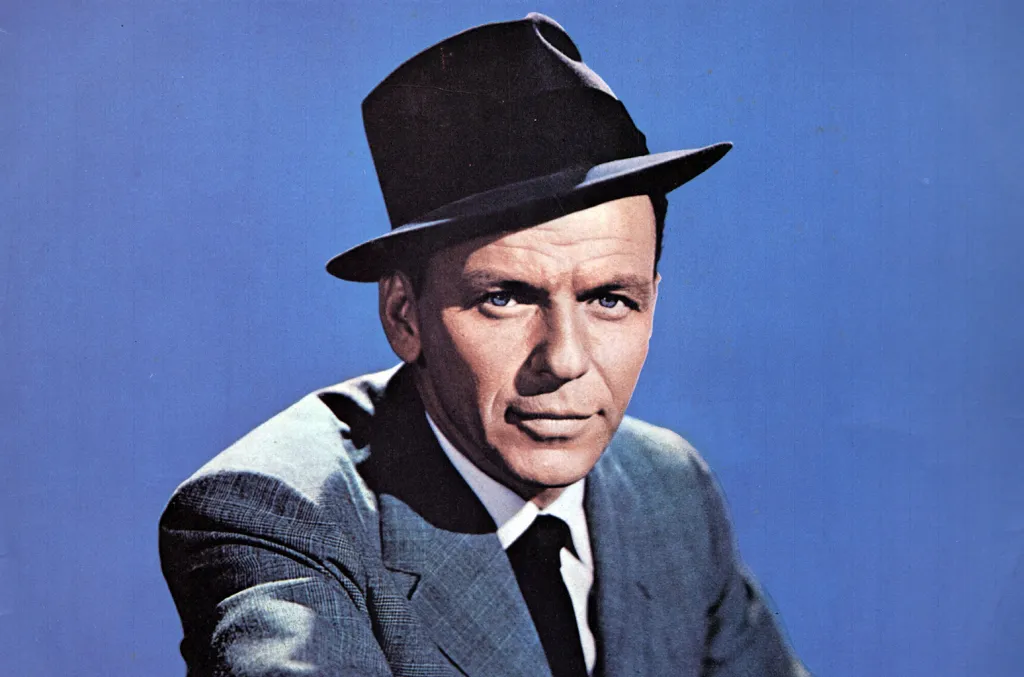
Frank Sinatra circa 1958 Frank Sinatra circa 1958

The other day I found a clip of a VTuber talking about expanding beyond their typical music taste. In this case they had heard a small snippet of a song by Frank Sinatra somewhere, and decided to check it out. The song? It's Nice To Go Trav'ling from the Come Fly With Album. The clip took a turn that I found a bit surprising.

The VTuber stated that they really liked the song… It was basically a silly piece of music, one they even had a thought of covering. Until they heard one verse, a verse that changed everything. Why? Well, as they stated, Frank said a slur word. And he didn't just say it once, he said it three times!

Frank Sinatra uttering a slur? In a song? A song on a record from a major recording label? A recording from 1958? I couldn't believe what I was hearing, and I had to understand what has going on. So I looked up the song lyrics, and what I encountered was quite a bit more complicated than I would have initially thought.

The lyric in question is:

It's quite the life to play gypsy And roam as gypsies will roam It's quite the life to play gypsy But your heart starts singin' when your homeward wingin' 'cross the foam

This wasn't my first time encountering the interpretation of this term for the Romani people as a slur. But, as with many situations there is more to this than one might expect, or at least I expected from the context.

On The Surface

If you search the web for the phrase “is [redacted] word a slur”, you will likely find articles like Why It’s Time to Stop Saying “Gypsy”, which claim:

To answer your question about this frequently Googled term, the short answer is yes, absolutely. The word is as a racial slur against the Roma people, the PC term for gypsy.

Reading this article, I was immediately put on alert. Anytime someone decides to take an absolute position, it seems more likely they will have reached a conclusion that is, at best, dismissive of part of the information that is available.

The Etymology

This was where I took a look at the word from an etymological standpoint. Why? Because our language has history. Contextual use of language based in history is frequently ignored when people take a stand, especially an absolute stand.

Enter Grammarphobia with the article: Is ‘Gypsy’ a slur?. This article very clearly documents that the origins of the word were used in a pejorative manner:

The earliest form of the word in English, which the Oxford English Dictionary dates to the 1530s, was “Gipcyan,” an abbreviated version of “Egyptian.” […] And many early appearances of “Gypsy” in English were highly pejorative because, as OED citations show, these itinerant foreigners were often viewed with contempt and mistrust, suspected of crimes, and driven away.

But, then there are some turns and twists in the story:

In later use, Oxford adds, “gypsy” (by this time lowercased) was used playfully rather than contemptuously for a woman, “and applied esp. to a brunette.” All those uses have died out.

But since then “gypsy” (also spelled “gipsy”) has acquired several more meanings, none of them pejorative. Most date from around the mid-20th century, [...]

And it's these meanings that many of us are more familiar, and are likely the origin of the verse in the Frank Sinatra song:

1) Someone who’s free-spirited or doesn’t live in one place for long.

2) A person with a career or way of life that’s itinerant or unconventional, especially a part-time or temporary college faculty member or a performer in the chorus line of a theatrical production.

So, there it is, the likely reason the song contains (the Sammy Cahn penned) lyric that is interpreted as containing slurs. These definitions are the likely reason Frank Sinatra sang them: they were understood as meaning carefree and free-spirited.

I think it's safe to say the conclusion that Grammarphobia states, was likely the prevailing thought in the 1950s-1960s:

Our conclusions are that that “Gypsy” (with a capital “G”) is offensive to some people, and should be used with caution if at all. It should be avoided entirely if any ethnic connection is implied; instead, the words “Roma” or “Romani” should be used. Meanwhile, the non-ethnic uses of “gypsy” (with a lowercase “g”) should not be condemned.

Final Twist

So, if I were to take Grammarphobia's conclusion that should be the end of the discussion, right? Not exactly, there was still another piece of context to consider. And, it's the context that the VTuber was most likely having the strongest reaction to when they condemned Frank for using a slur.

The VTuber in question is British, and their understanding of the Romani people is likely very different from the majority of people in North America. We have long prided ourselves on being open and welcoming to immigrants and itinerant peoples (despite what our current government would have you believe).

This is not to say that we are in any way perfect. There are plenty of examples of distressing things that have happened to immigrants in this country (no example is louder than the imprisonment of Japanese Americans during World War II). There is no debate on this topic. However, on the whole, we have a better track record compared to many countries.

The Romani in Europe, however, have had to endure what appears to have been a ceaseless stream of racism, and distrust. One of the worst cases was the Romani Holocaust (aka Porajmos) by Germany in World War II. But, there are systemic biases and racism that remain throughout Europe to this day.

While there are efforts underway to try to establish the Romani in Europe, there is a very long path ahead for tensions to be reduced. I would likely say that it is going to take several more generations.

Which is where this VTuber comes back in to the picture. They are part of a generation that is being more sensitive to these issues. And for that they are to be applauded. Seeing that this particular song would likely be seen as being incredibly insensitive to the Romani, they are right to take a pass on it.

Although, maybe there's a way to change the verse to remove the stigma? Perhaps this would work?

It's quite the life to play carefree And roam as nomads will roam It's quite the life to be at ease But your heart starts singin' when your homeward wingin' 'cross the foam


Category: #Essay Tags: #music, #vtuber, #history, #romani, #sinatra,

FediRing
◀️ Prev Home Next ▶️