Part One: Headphones, Earbuds, & IEM's Roundup
Introduction
In 2015, I wrote a series of reviews on the best ear buds under $25 and $50 on The CerebralRift. The winners out of the whole series were a pair of Symphonized earbuds that are no longer available, and the SoundMAGIC E10's. These were truly, for the price and the time, some of the best earbuds that I could find. However, one of the failed after a couple of years of use, and the other I lost a couple of years ago. So, I had to replace them.
But, things change. The prices on these products have all gone up (even if only slightly), and my usage has changed: I'm much more interested in home use these days, and while I still prefer cabled earbuds, the value in wireless earbuds hasn't escaped me.
So, this isn't a review, exactly. Instead, I'm just going to document my recent journey in regard to finding some audio products that I feel are worthwhile. Buckle up, there's close to a dozen products that we'll cover in this list over the next several weeks. This week we're just going to focus on the headphones.
Headphones
This is the easiest of the items to start with. I didn't have to do a lot of research, and I knew that what I was getting was going to be excellent. Why? Because I bought headphones that fit into two categories: (a) extremely well reviewed headphones, and (b) headphones that are considered iconic in audio circles.
There's also something else to be said about these: I wasn't paying super close attention to the price tag. Why? Large headphones are home use products to me these days. In the past I carried a set of Bose Tri-Port headphones with me. But the problem with them was they kept breaking in ways that couldn't be fixed easily (part of the headband mount for the ear cups kept breaking which I could only repair by sending them back to Bose, which I never investigated doing). So, as I mentioned in my original article, that was one of the reasons I went to inexpensive wired earbuds in the first place: I was tired of spending $100-$120 each time I needed to replace a pair of Bose headphones.
But, just because I wasn't paying attention to the price tag in the way I would have in the past, that doesn't mean I just went out and spent frivolously. $500 or $1000 is a ridiculous amount of money for a pair of headphones, IMO. But keeping to $100 for a set of headphones doesn't mean you will get the best bang-for-the-buck either.
The other thing is: sometimes being iconic matters as much or more than sound quality. What? Is this the Unattributed you know? Where did he go? Let me explain.... The sound signature of an audio component is a personal choice. This has always been true. And, while I tend to favor accuracy in sound, sometimes you want to listen to music in a way that is more comfortable to your ears, instead of listening with something that is analytical and perfectly correct. I've known this for decades, it's just that I've favored accuracy most of the time.
I can give an example: there were a pair of loudspeakers (in fact I think it was the whole line from one company) that I really liked. I visited an audio store multiple times with different audio recordings to throw at them, and time after time they continued to impress me. The clarity, the detail, the imaging was all amazing. However, the sound signature was not what you'd expect. The bass was clear and consistent, the mid-range was warm and flat, the top end actually had a signal roll-off. And to my ears they were amazingly comfortable to listen to, even if I couldn't afford them (IIRC, the price as around the price was around $800/pair). So, instead I found speakers that I could afford that weren't nearly as great sounding, but they weren't going to break my bank account.
So, while I've always favored accuracy in reproduction, I also understand the value in having a sound signature that fits how you want to listen to the music. And sometimes the accuracy of something doesn't need to be perfect in order for it to be enjoyable. But, this doesn't mean I'll accept just anything: fuck Beats – they still sound like shit. Same with Raycon. Those two brands scream, “I care about fashion” and bullshit lifestyle branding instead of a good product.
With that understanding in mind let's talk about a couple of pairs of headphones.
Grado SR80x
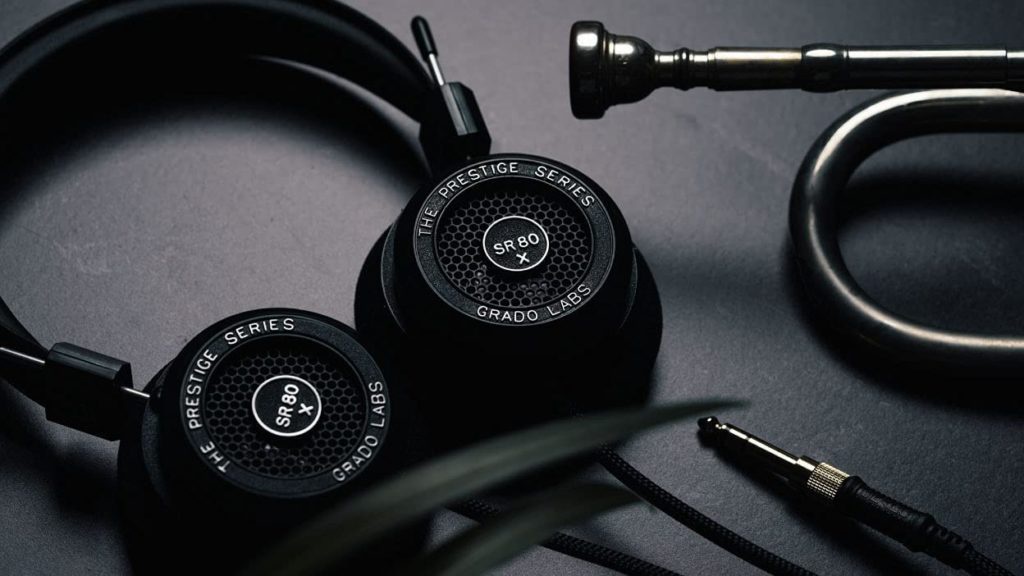
Yeah, this is what I meant when I said 'sometimes' the sound signature is more important than the accuracy of the sound. This is also the case where the brand is so iconic that it's well known in audio circles, and the company has a reputation solely based on their products and service. If you look at the RTings review for the SR80e (the SR80x is an update to the SR80e) you can see they found the SR80e has an overall neutral sound. But when you dig into the graphs another story emerges.
These headphones have a bass roll-off, basically from the mid-bass down the signal response gets lower and lower. These days we see the opposite in most headphones: the bass, especially in this frequency range, is boosted. This often leads to muddiness and pulsating / throbbing sounds that, IMO, are annoying. Basically bass that has a bit of boost or is flat may be better, IMO. But sometimes having the roll-off characteristic is welcome.
The mid-range is basically flat, except for one small bump in the lower mid-range that is likely to go unnoticed. The treble is where things get interesting with several spikes in the lower and mid-treble range, while the upper treble rolls (not the best word for it given the chart) off. This just gives these headphones a light and bright sound, with a solid mid-range.
The thing I think most people would find surprising about these headphones is that there is still a well-defined bass sound. I said above that you expect “pulsating / throbbing” sounds from headphones that have boosted bass. However, you still get that from these headphones, just not at the level that you feel like your head is going to split open.
There are a couple of characteristics of these headphones that are worth noting. First, they are open back headphones. What does that mean? It means the wall behind the driver, the one that is on the outside of the headphone is not closed. This allows to the sound to feel more open and natural, but it also means that others around you can hear what you are listening (IE, the sound leaks). The nice thing about this is that there is a lot of room to breath in them: air can move between your head and the ear pads. If you've ever started sweating while wearing headphones, you'll know how annoying it can be. For me personally, this has allowed me to listen using the headphones for literally hours on end. Something that is pretty rare for me, and is also partially explained by the other characteristic worth mentioning.
That characteristic is that these are on-ear headphones, and that puts them in a class that is less seen in this class of headphone. These headphones are design to sit on your ears, and don't have cups that fit over your ears. This is one of the reasons that there is more room to breath: there is more space for air to get to your ears and help keep you cool. This does have the side effect of not providing any sound isolation, so these aren't headphones that you want to use outside, on the street, in crowded places, or anywhere there is a lot of noise that could detract from your listening. Personally, that's not an issue I'm concerned with since, as I said in the beginning, I don't consider these for travel, These headphones are for home use where I can control the environment.
Sennheiser HD600
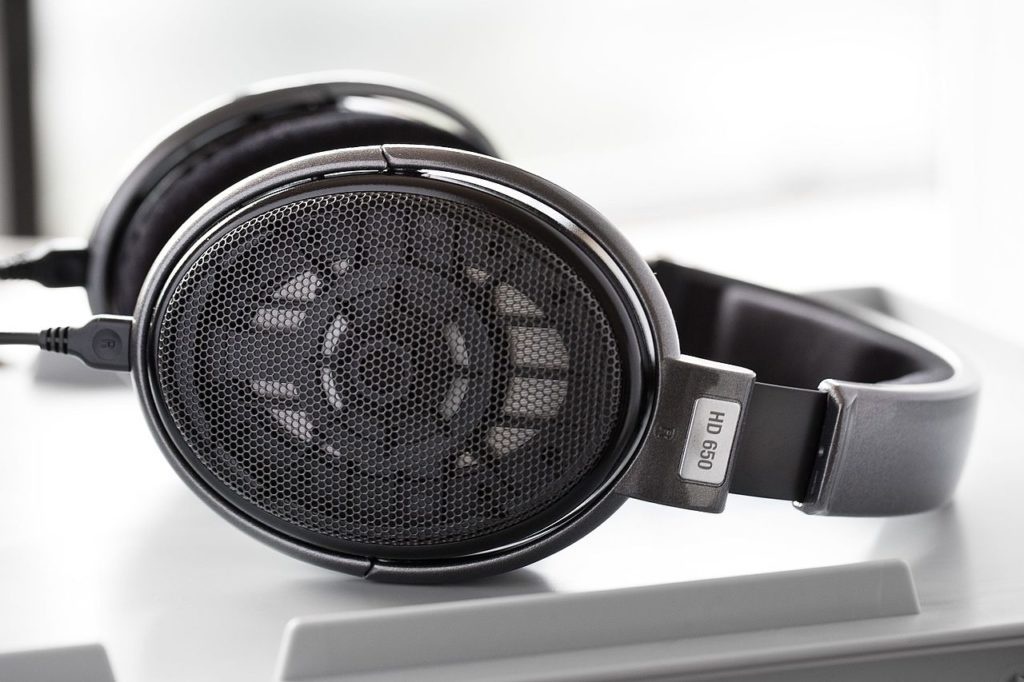
If you've known me for a long time, you probably know that I like Sennheiser headphones, well at least the ones designed for a more premium audio experience. The fact is, I had wanted to buy Sennheiser headphones for years. The HD600 came out in 1997, and I knew of them in the early 2000s, but at that time I didn't have the budget for them. But now that I could afford them, they had to be part of my collection. Why? Consider that they are often considered reference headphones by many in the audio world because of the flat, detailed sound, excellent sound stage and just overall quality. Don't believe me, just check the RTings.com review of the HD600's. (Note: the photo above is of the HD650 headphones since it was the only one I could find under a Creative Commons license.)
This does mark one of the bigger trends for me in terms of audio. I tend to like a “neutral sound”. That is, I tend towards a sound that is more flat, and less “V shaped” (V shaped sound is characterized by boosted bass and treble). I think the reason for this is that the “boosted bass” style of headphones just sounds too unnatural to me, which ends up distracting from the rest of the music.
How do these compare to the Grados? There is less bass roll-off, and the treble is not quite as bright. The sound stage is larger, the imaging is nicer. Basically anything that I liked about the Grado headphones is present and improved in the HD600. Of course, you probably should expect that given that the HD600 costs 3x as much as the SR80x.
There are a few qualities that are quite different between the Grado and Sennheiser headphones that are worth talking about. The first is that these are over ear style, instead of on ear style. As I mentioned above one of the advantages of the Grado headphones is that they don't put a lot of force on your head (~0.8lbs of pressure). The Sennheiser headphones use about double the pressure (1.5lbs of pressure). This has the disadvantage for me of pushing the temple of my glasses against my head. It's not too bad overall, but sometimes it contributes to me wanting to take the headphones off sooner.
The second big difference is in the cables. The Sennheiser's take the win in this area — mostly. The cables on the HD600 is long: 3 meters (9ft, 10in), whereas the SR80x is 1.8 meters (6ft). The Sennheiser's have a thinner, more flexible rubber shielded cable. The Grados have a cloth covered, thick cable that isn't as flexible but is also far less prone to twisting and kinking. But all of that doesn't really matter, they both work well, don't have transference issues and sound good. Where the Sennheiser wins is that the cables are detachable. The cable is plugged into little sockets in the bottom of each driver enclosure. This is convenient in several ways: want to get a shorter cable? Need a longer cable? Need to replace a broken cable? Need a cable for a 2.5mm jack instead of the standard 3.5mm jack? Just look them up, and order them. No need to do any extra work with these headphones, it's all just a quick swap that will take less than 5 minutes.
The last item worth mentioning is (a) quite technical, and (b) debate-able. The issue at hand is impedance or resistance. The resistance is the property that determines how much power is needed to energize the drivers in the headset. Now this can be important in some cases, however most of the time it isn't that big of a consideration. However, some people swear that if a pair of headphones has a high resistance, then an amplifier is needed to drive them properly. However, there are others, such as Crinacle (a highly prolific IEM and Headphone reviewer) that say that you typically don't need a specialized DAC and headphone amplifier to drive most headphones, just a simple dongle style DAC is enough.
So, why did I bring this up, especially if it doesn't matter? Well, the impedance of the SR80x is 38Ω, while the HD600 is 300Ω. Yes, the Sennheiser resistance is nearly 8 times that of the Grado headphones. That's just too big of a difference to ignore. However, I did try using the HD600s with a simple USB-C DAC dongle on my phone, and they seemed to work fine. Then I tried it with my Fiio BTR5 DAC (Bluetooth wireless DAC that can output more power), and the HD600s sounded better to me than they did with the USB-C DAC. But that's all very subjective, and really outside my use case since I'm only using these headphones at home and not taking them on trips.
That Big Ol' Elephant

I'm sure the above reviews are going to be controversial. How can I give a 79% to the Sennheiser's, and 86% to the Grados? Well, the fact is that if I were only judging this based on the Sound Quality, the Sennheiser's would absolutely be the winner. I feel comfortable saying that the HD600's achieve a 91 out of 100 score, while the SR80x's achieve 85 out of 100. Seriously if you haven't listened to this generation of the Grados, you should. They are surprisingly good. And, if you compare the charts on RTings, you will notice more similarities than differences.
The build quality of both of these headphones is fairly equal. I know there are headphones that are built better: better, exotic materials, more interesting design language, etc. However, I don't feel like headphones need to be fashion statements. So, as long as the build quality isn't cheap, seems like it will last a long time, and doesn't interfere with the sound quality, I can only give them a good score.
So, that brings us to Price and Value, also known as: The Big Fat Elephant In The Room.
The Grados cost $125US, while the Sennheiser's are $400US. That makes the Sennheiser's 3.2 times more expensive than the Grados. So, the big difference between the HD600 and SR80x comes down to the value of the drivers and tuning. Given that the component differences are significant, can you say that the price difference is justified? Or, to put it another way: does the improvement in sound quality that the components and tuning bring to the HD600 justify the price difference? And, if it doesn't then what would have been appropriate.
Honestly, I'm still going back and forth on this a bit. But, I think I've settled on an answer: and that is no, the HD600 does not offer 3.2x the sound improvement over the SR80x. They do, however sound about somewhere between 1.5-2x of the SR80x. That means the price point for the HD600 should be about 2x the price of the Grados, or $250. Given that the price of the components is also a factor, then I would consider $250-$300 to be on target. And that's how the ratings end up with the Sennheiser's being lower than the Grados.
Something To Note
If you hadn't realized it already, I've focused this review mostly on the sound quality of the headphones. I haven't stated that I am looking for anything other than sound from them. I don't care about isolation, noise cancellation, sound leakage, or other DSP (digital signal processing) types of features that you find on modern headphones. What I do care about is that the sound that is coming out of my computer, cell phone, tablet, stereo or what ever I use for my music to be as cleanly relayed to my ears as possible.
There are times when you want these other DSP features in your listening device. However, I find that for me those features aren't useful in 90 percent of my use case. For example, if I want to play a game, I'm generally not wearing headphones, instead I'll use desktop speakers with the DSP effects necessary for that game (spatial processing for effects, for example).
This doesn't mean that I never want these features. In fact, typically in the devices that I want for mobile application, I am likely to want those features. And, there are other ways to get them, like using a Fiio BTR5, which has both noise cancellation and a microphone (which means it's a good option for using headphones to make phone calls).
The idea of having these features separate from the headphone is an advantage. The technology for DSP is constantly changing and evolving. Offloading that to a device that can be replaced makes sense, and allows me to use these timeless headphones as I want to use them.
Where Do I Go From Here?
So am I done with headphones? Not by a long shot. I have come to a point where I think the headphones that I listen to are more a part of how I want to listen to music at a given point in time, than they are solely about accuracy / neutrality. And, honestly, I want to have some of the truly iconic headphones in my collection, and be able to compare them with each other to understand how they earned their reputation.
Some of the brands (I won't name the models) of headphones I want to check out include: Sony, Beyer Dynamic, Philips, AKG, Samson, and more. I also might check out some more models from Sennheiser and Grado. However, I don't know how soon I will be checking them out. I have developed several interests lately, including some different in-ear styles of headphones that we'll be checking out in future installments of this series.
| FediRing | ||
|---|---|---|
| ◀️ Prev | Home | Next ▶️ |